Long term conditions.
Excellent care. On repeat.
Ease of use
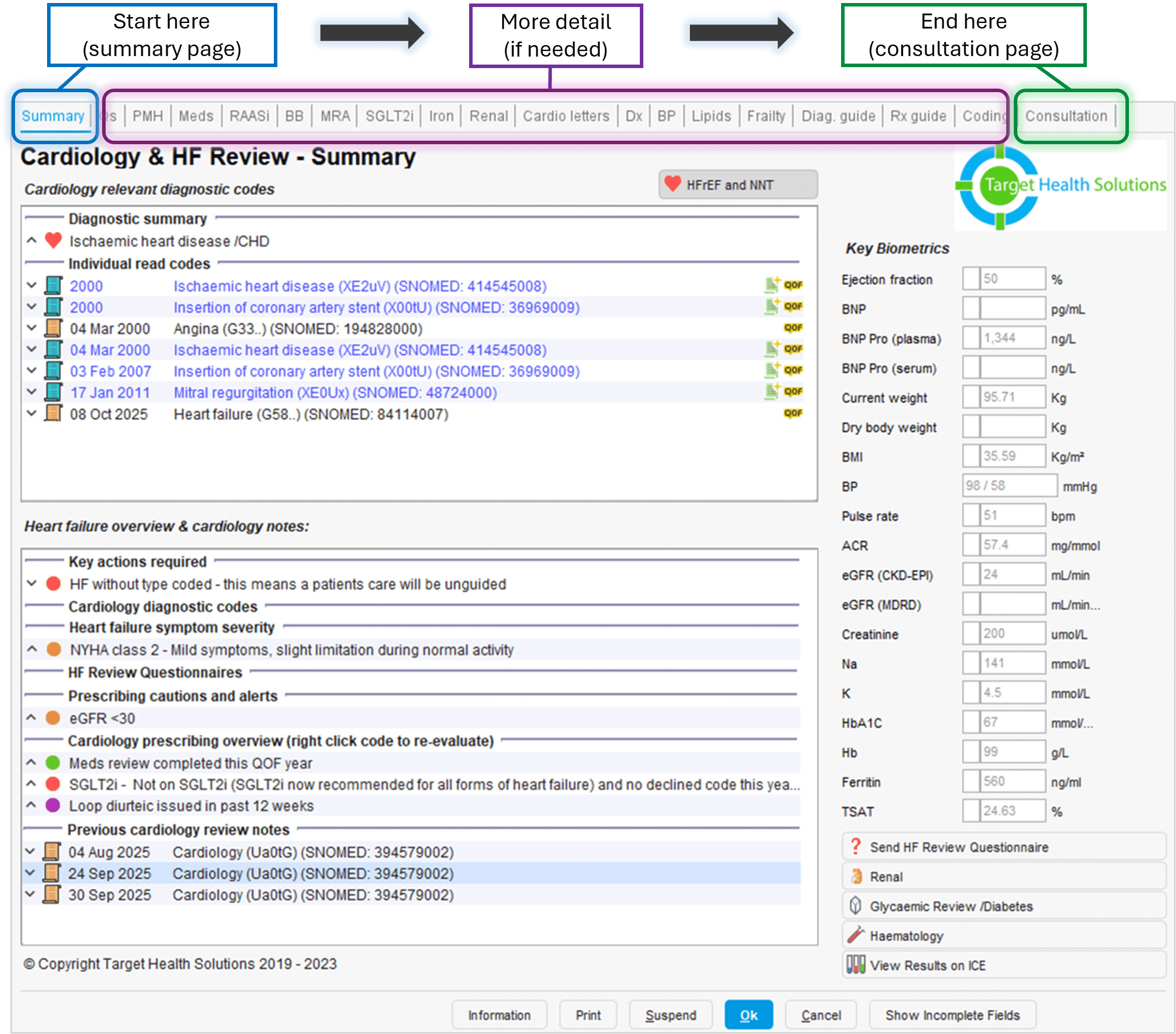
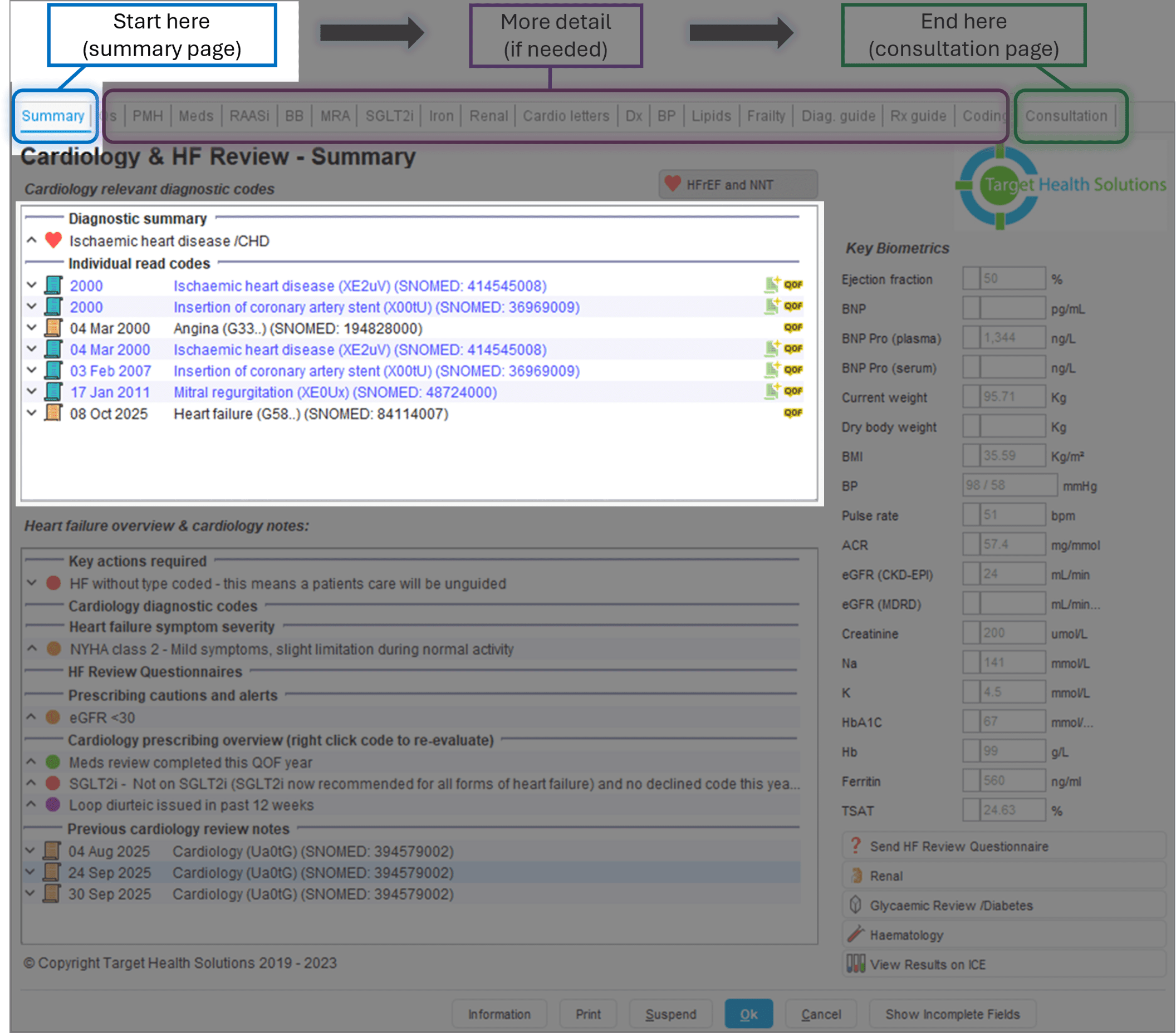
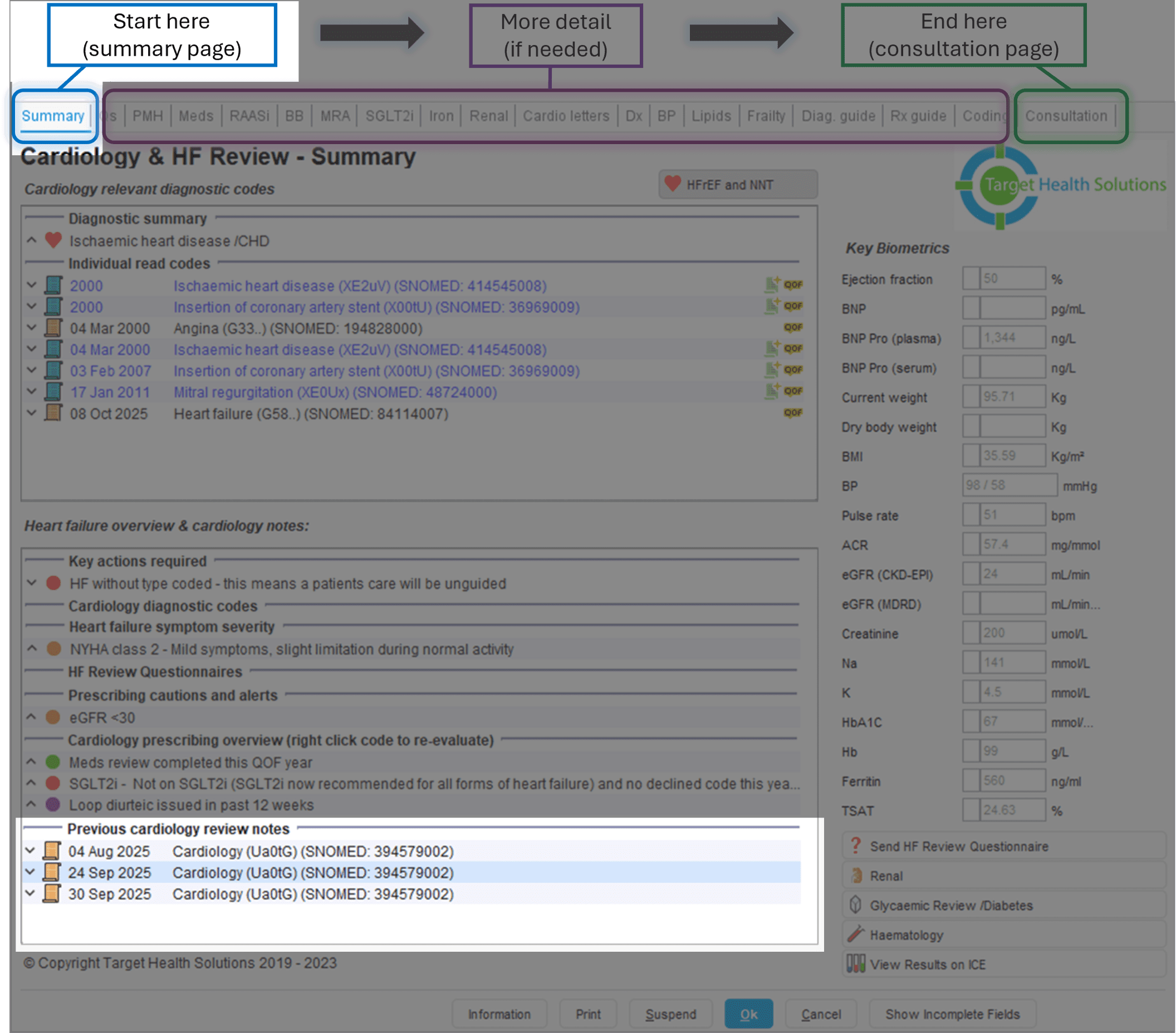
Health history at a glance
Summary of the long term condition being reviewed and key diagnoses.
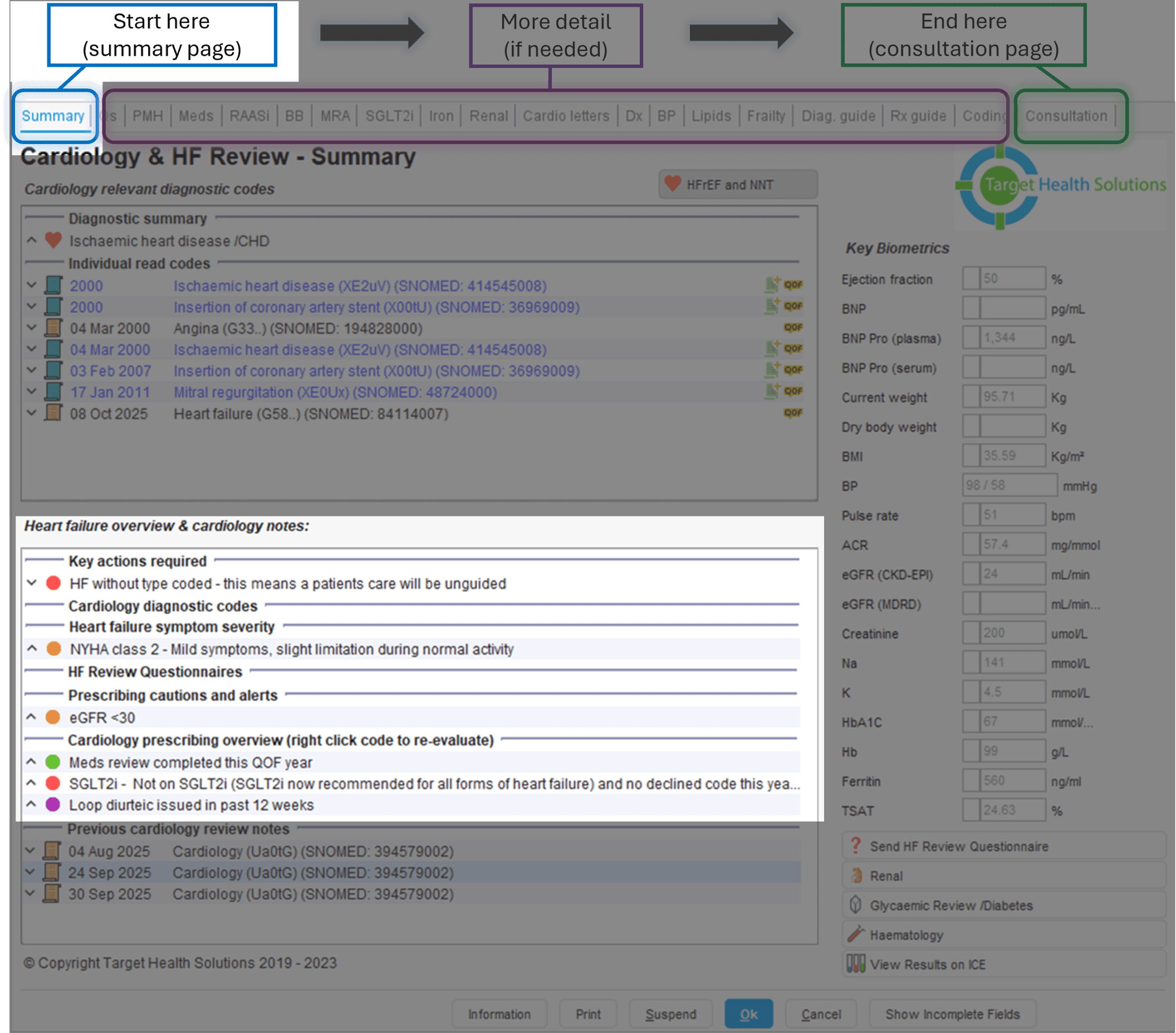
Key alerts and actions
Promoting Continuity
Previous entries for this condition and where your review will be visible. Click the arrow to open them quickly and continue from the last review, supporting continuity and saving time hunting throught the records.
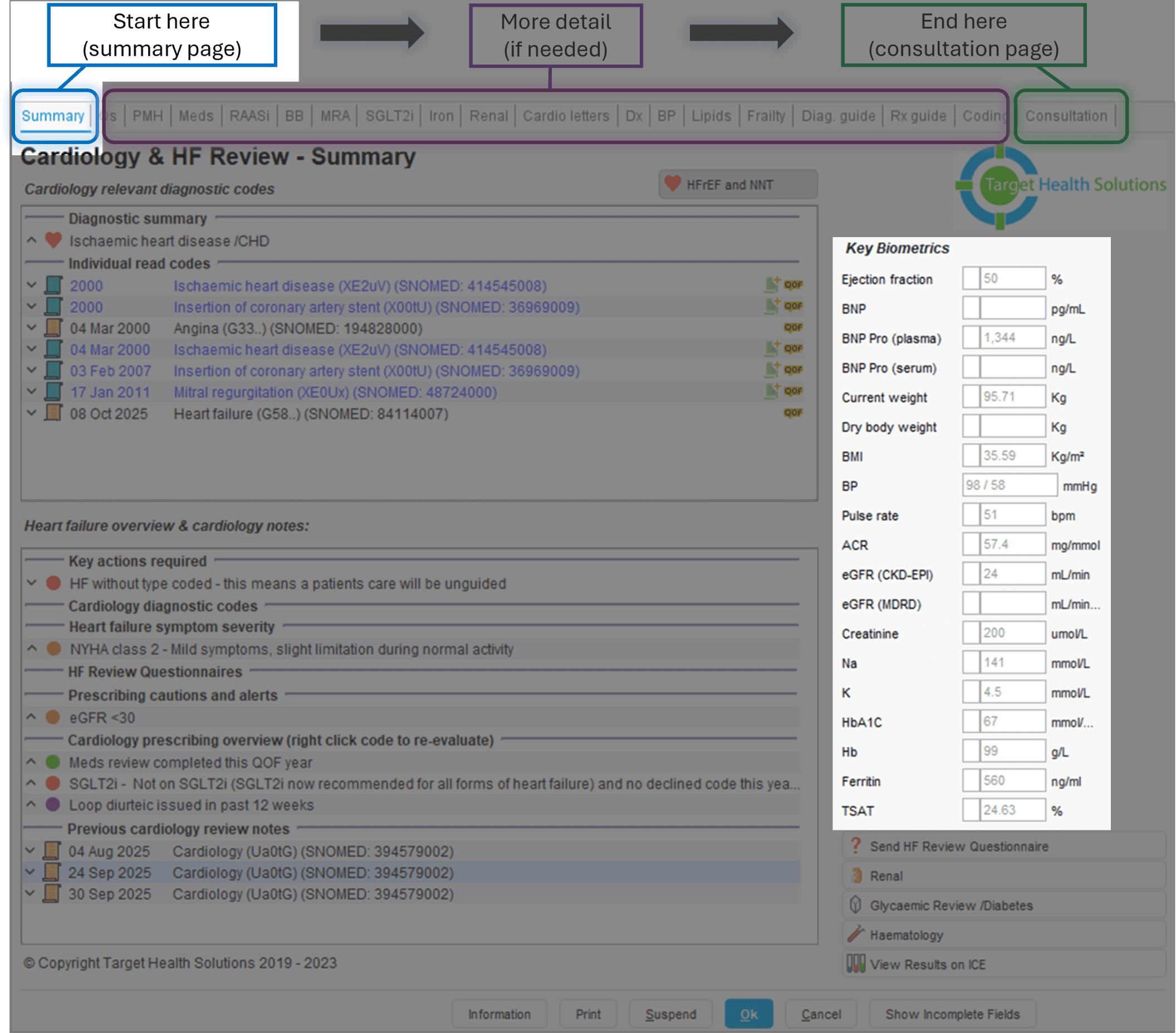
Relevant tests
All relevant tests in one place so you can review results quickly without hunting across different systems.
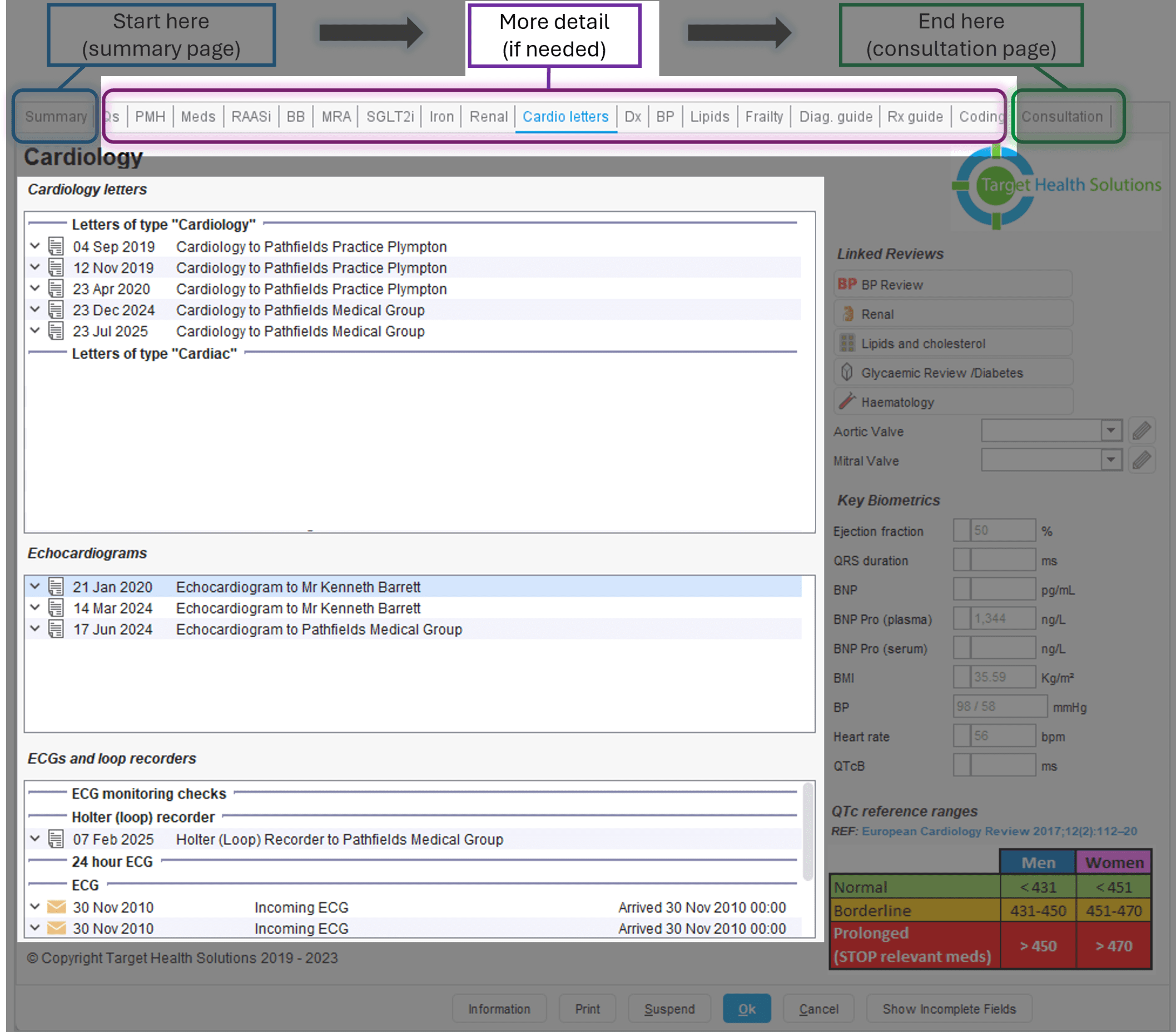
Key Letters, results, and guidance
The middle section brings together useful information like medication guidance, key letters, and results in one place, so review is quick and easy.
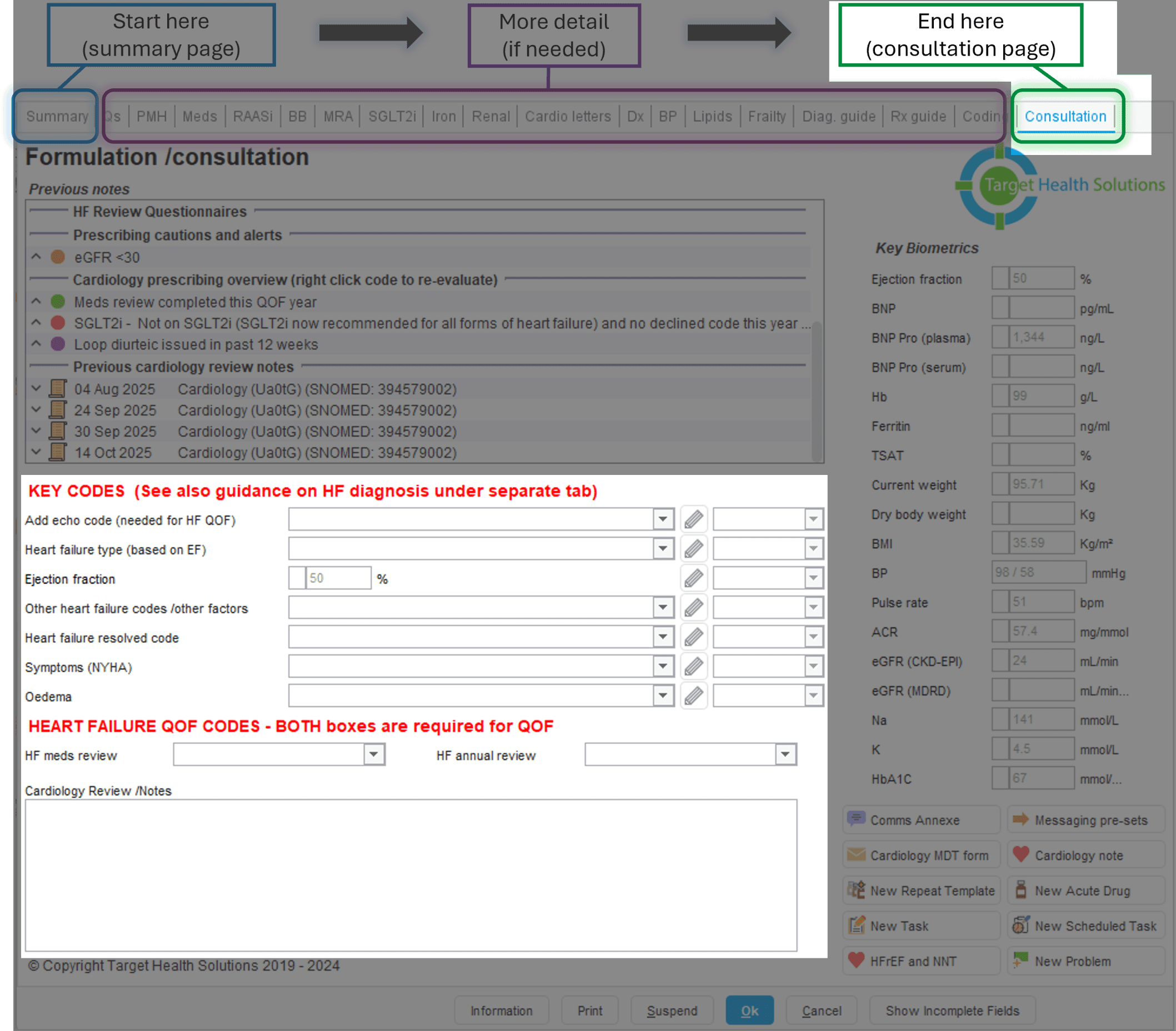
Completion and coding
By the end of the template you will have everything you need to make a clinical decision. Add the key read codes to update the population health dashboard, track progress, and complete QOF and other work.
Once you have made your entry, you are done. Your notes will show on the summary page for the next review.
Red Alerts. Turning complexity into clarity.
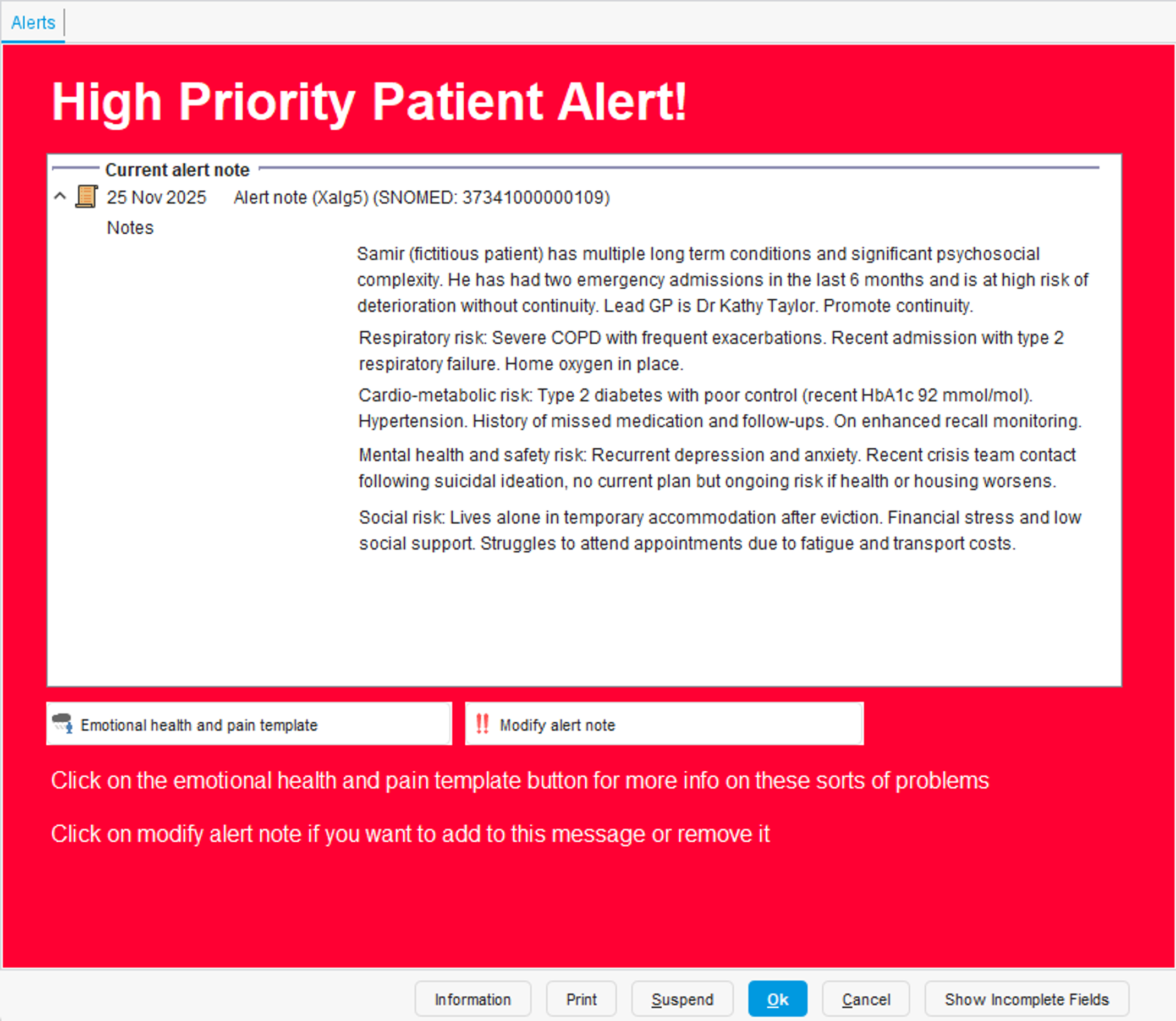
Red Alerts appear the moment you open the patient record, surfacing the critical risks and actions that matter most, exactly when you need them.
This promotes continuity at scale. Every clinician sees the same high priority picture and follows the same plan.
This shifts care from reactive to proactive, enabling safer decisions, earlier intervention, and truly joined-up care across organisations.
In short, Red Alerts help you deliver outstanding complex care while boosting productivity and saving minutes on every complex review. Those minutes add up, and so does the impact on your patients’ lives.
Superior recall systems for personalised care.
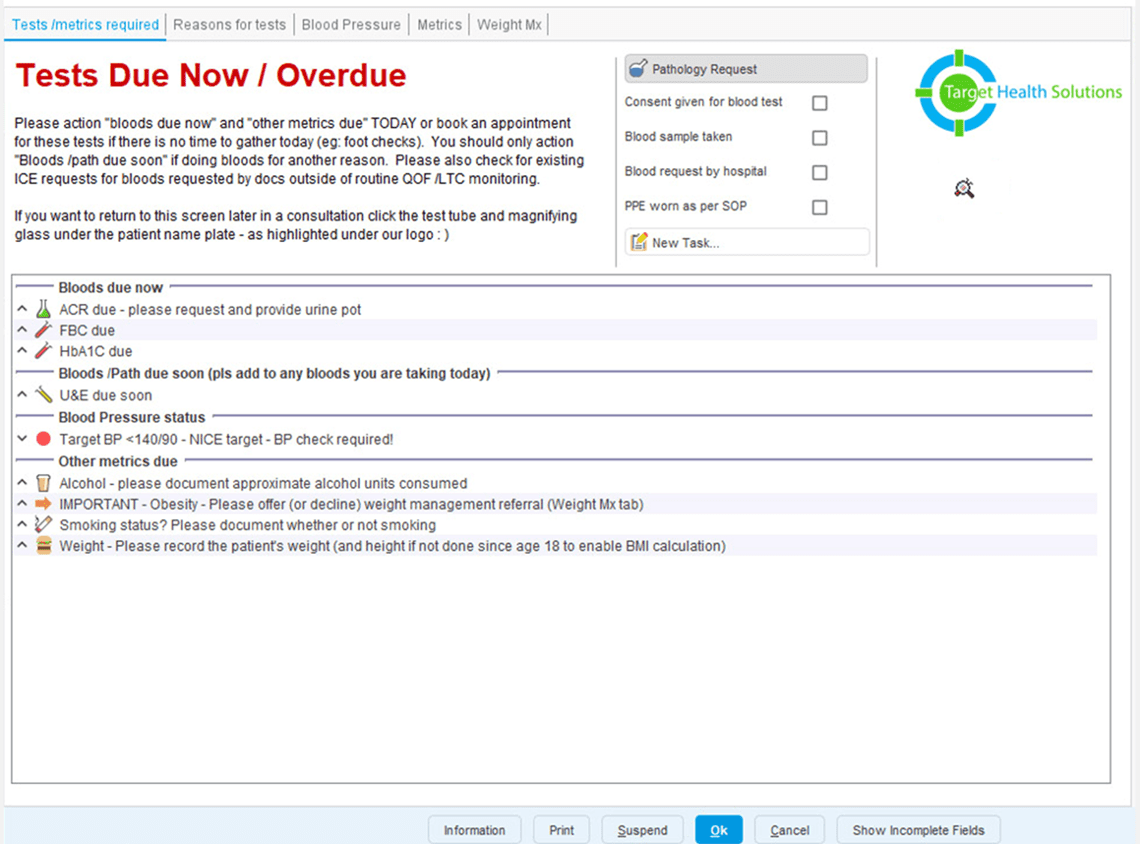
Standard recall
Enhanced recall
Cancer trackers
DMARD trackers
Prescribing Alerts. Prevent harm before it happens.
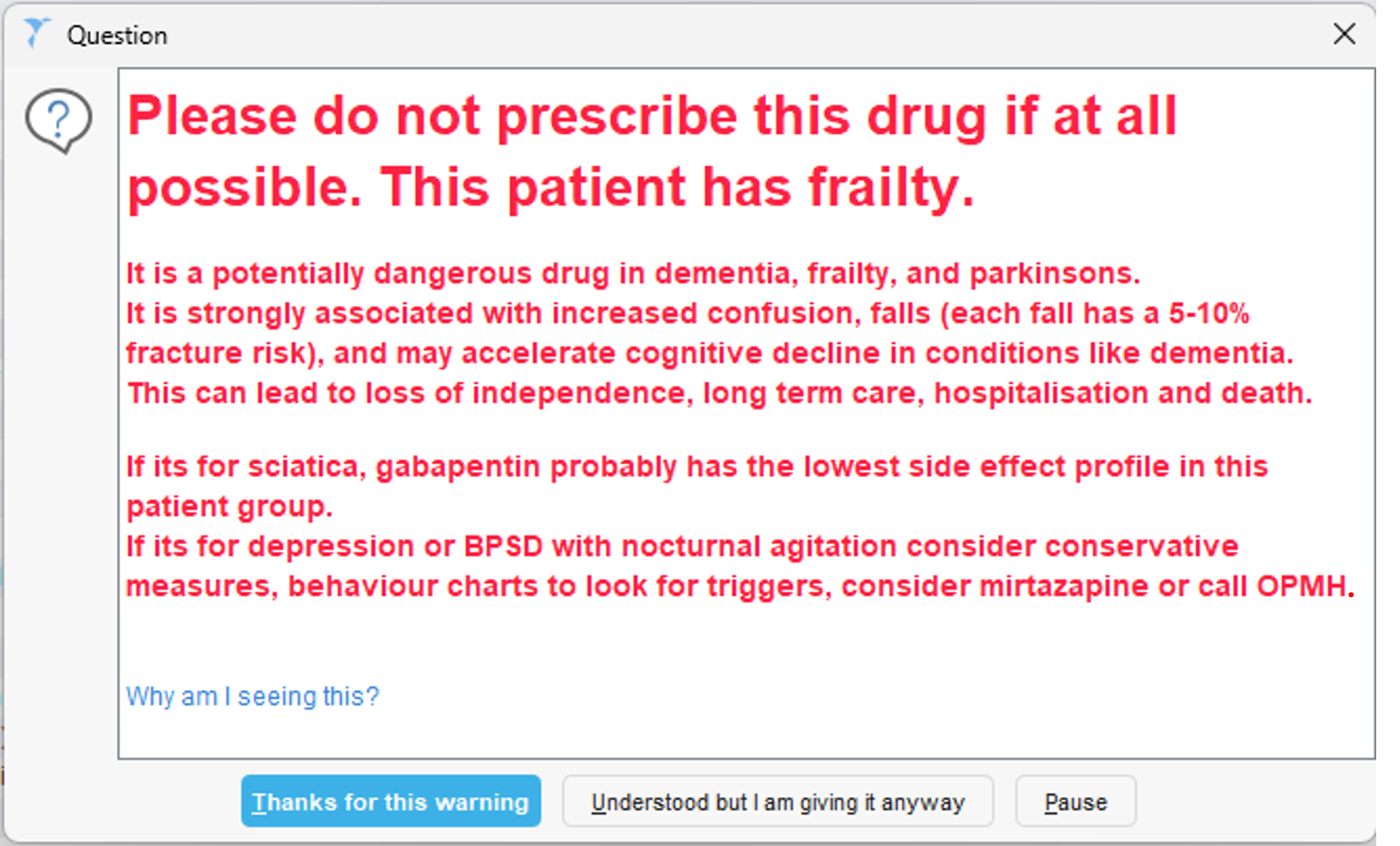
Prescribing Alerts support safer, more consistent prescribing for patients at risk of harm. THS scans the patient record for scenario-specific risks, including frailty, interactions, and comorbidity, then surfaces a high-risk alert at the moment of prescribing. In this exmaple, amitriptyline is flagged because the patient has frailty.
Alerts summarise the risk, highlight consequences, and suggest safer alternatives. This standardises high-quality prescribing across teams and reduces demand from harmful prescribing, including avoidable follow-ups, medication changes, and preventable admissions.
It is one of many reasons why established THS practices maintain consistently low harmful prescribing rates.
Population Health Management. On tap.
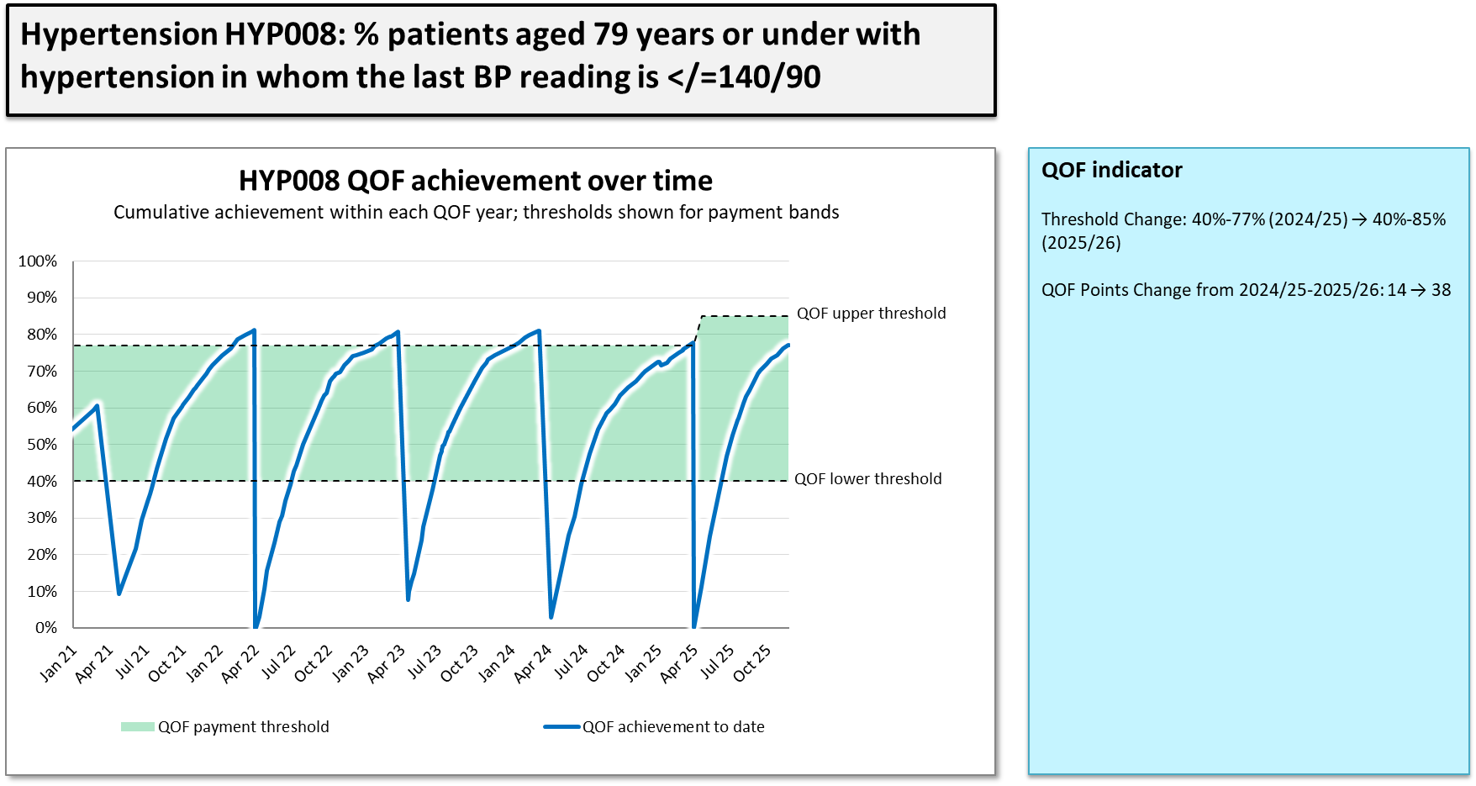
Track QOF progress
Track your QOF achievement over time with simple, readable charts built for busy practices.
See progress against payment thresholds, identify gaps early, and target improvements that increase income. Supporting notes and indicator details appear on the right.
Joint INT working with proven impact
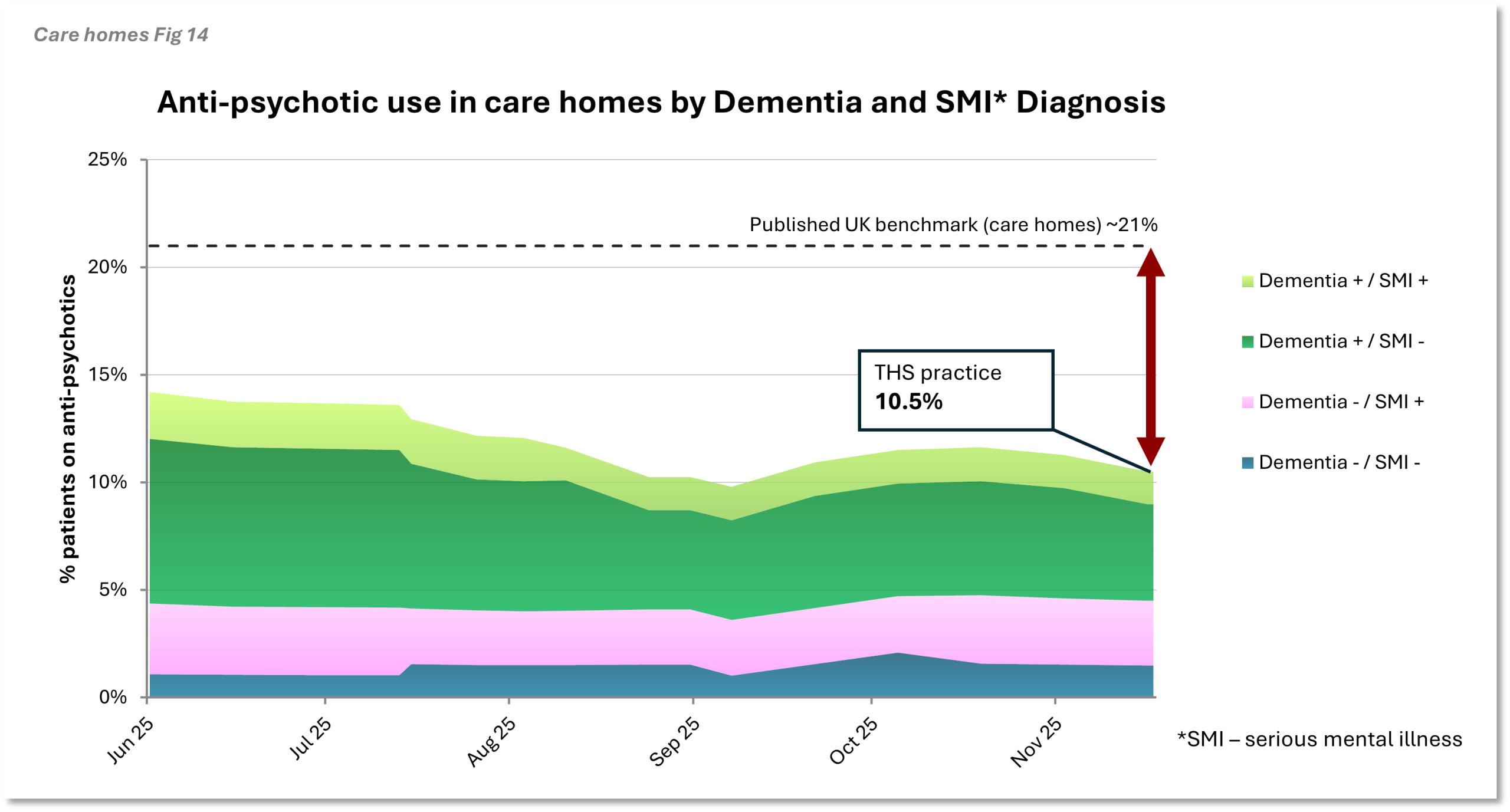
Using our Population Health Management Dashboard, a THS practice and Older People’s Mental Health (OPMH) delivered a joint QI project through Integrated Neighbourhood Teams (INTs) for shared care home patients on antipsychotics.
Patients were stratified by dementia and SMI:
- OPMH led reviews for Dementia+ / SMI+ and Dementia- / SMI- groups.
- General practice led Dementia+ / SMI- and Dementia- / SMI+ groups, seeking OPMH advice where needed.
This INT approach reduced inappropriate prescribing, with current prescribing rates at around 10.5% versus ~21% in published UK care home literature.
Population insight that drives performance
Blood processing has never been easier.
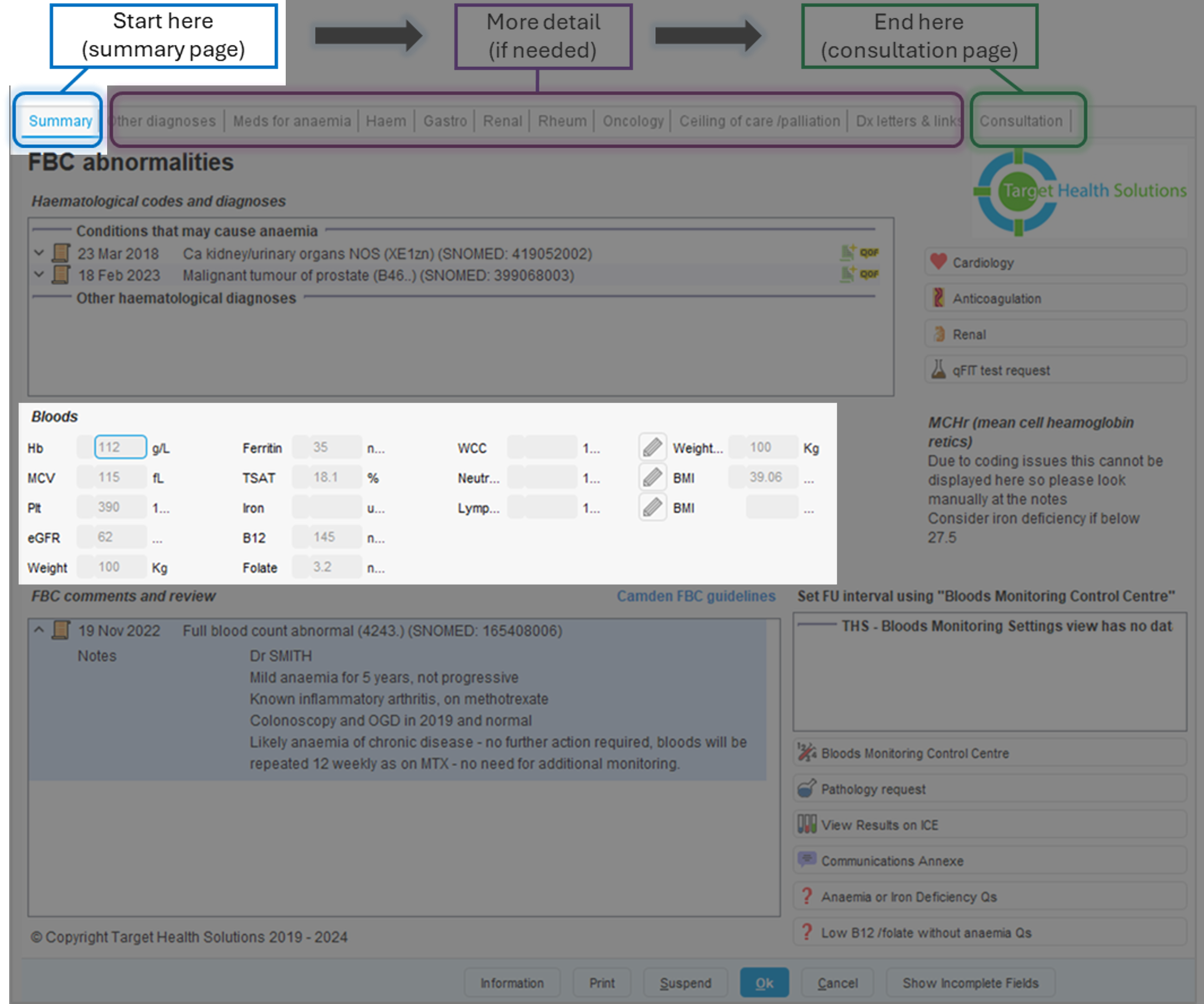
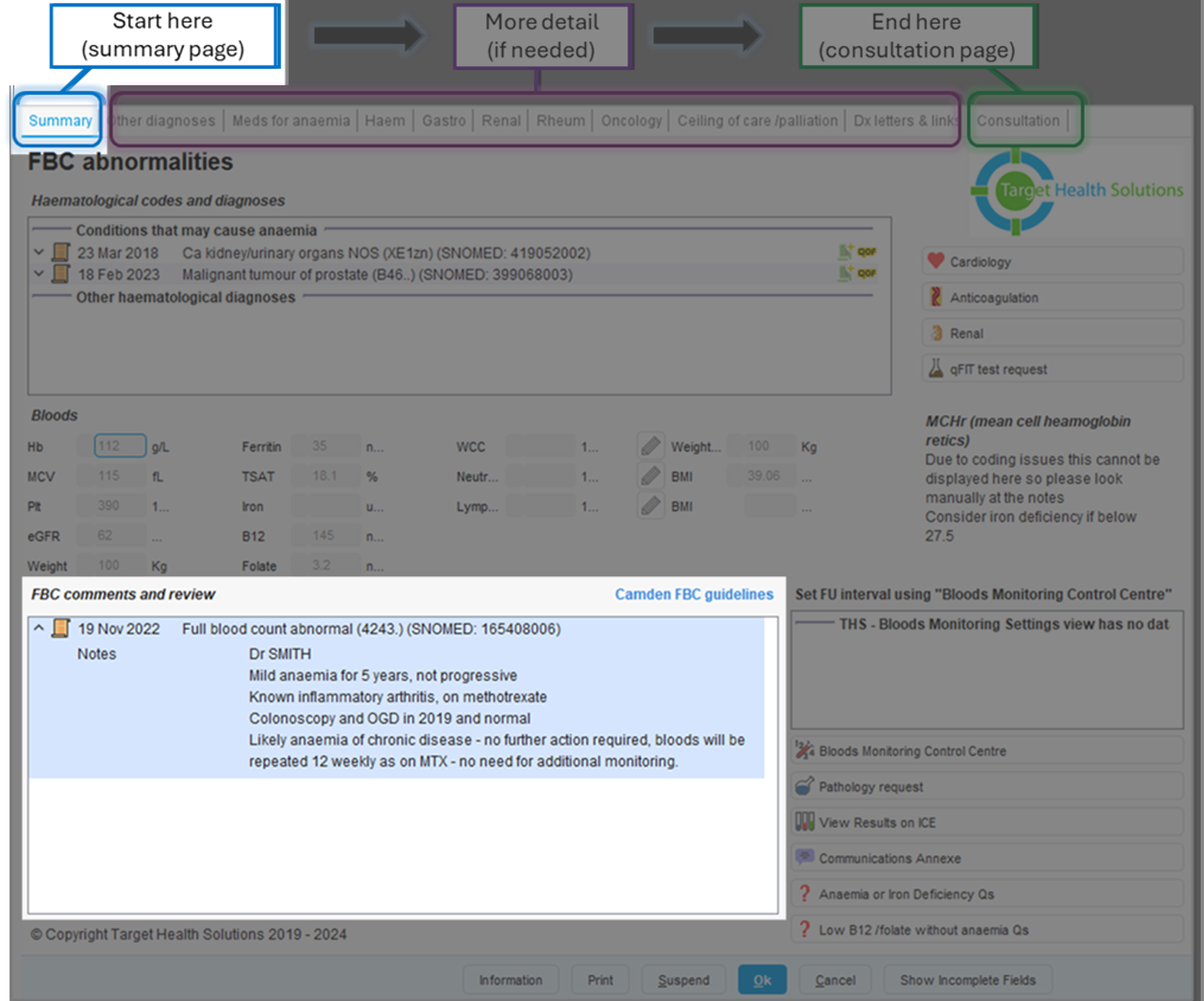
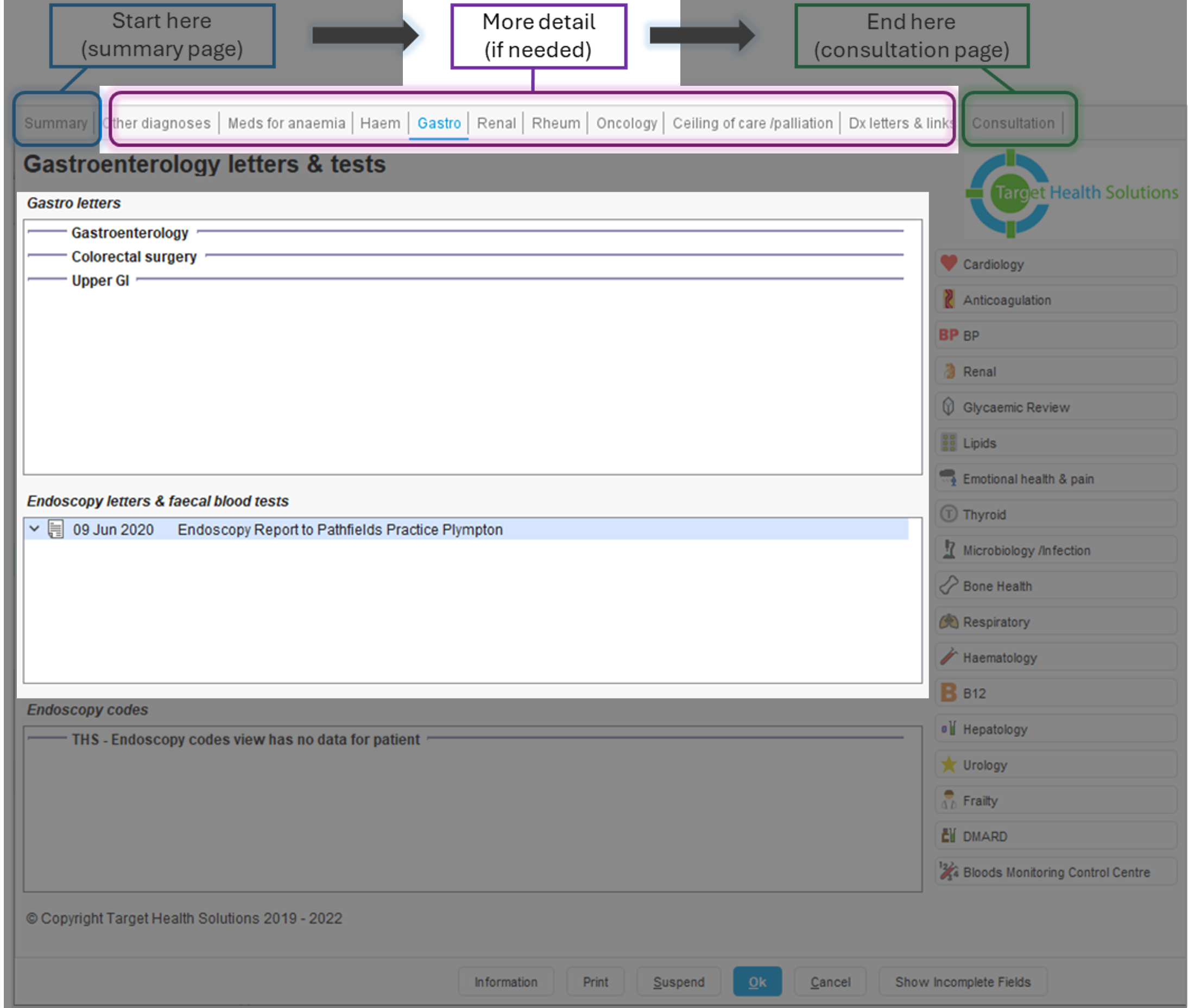
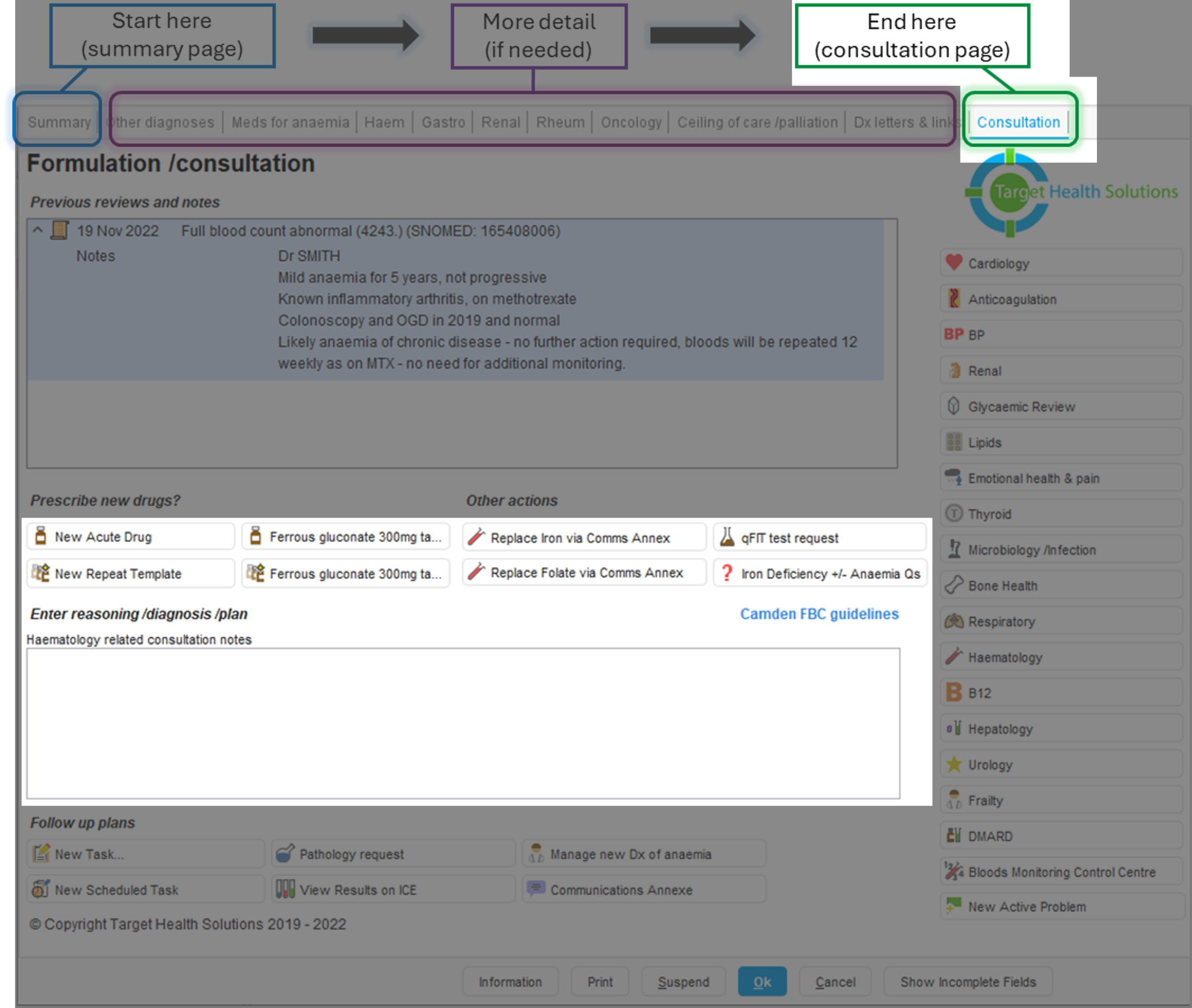
Blood processing templates
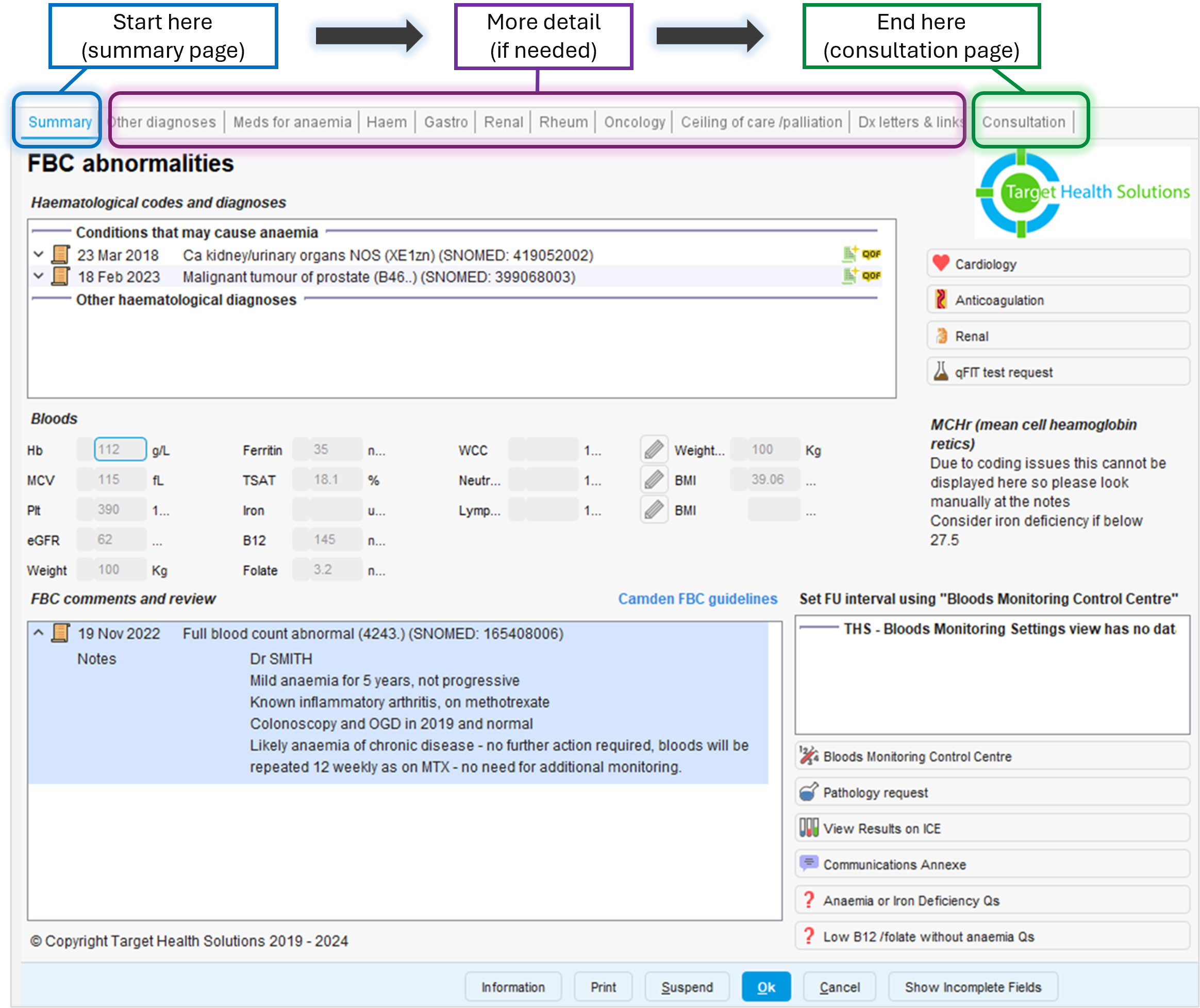
Summary
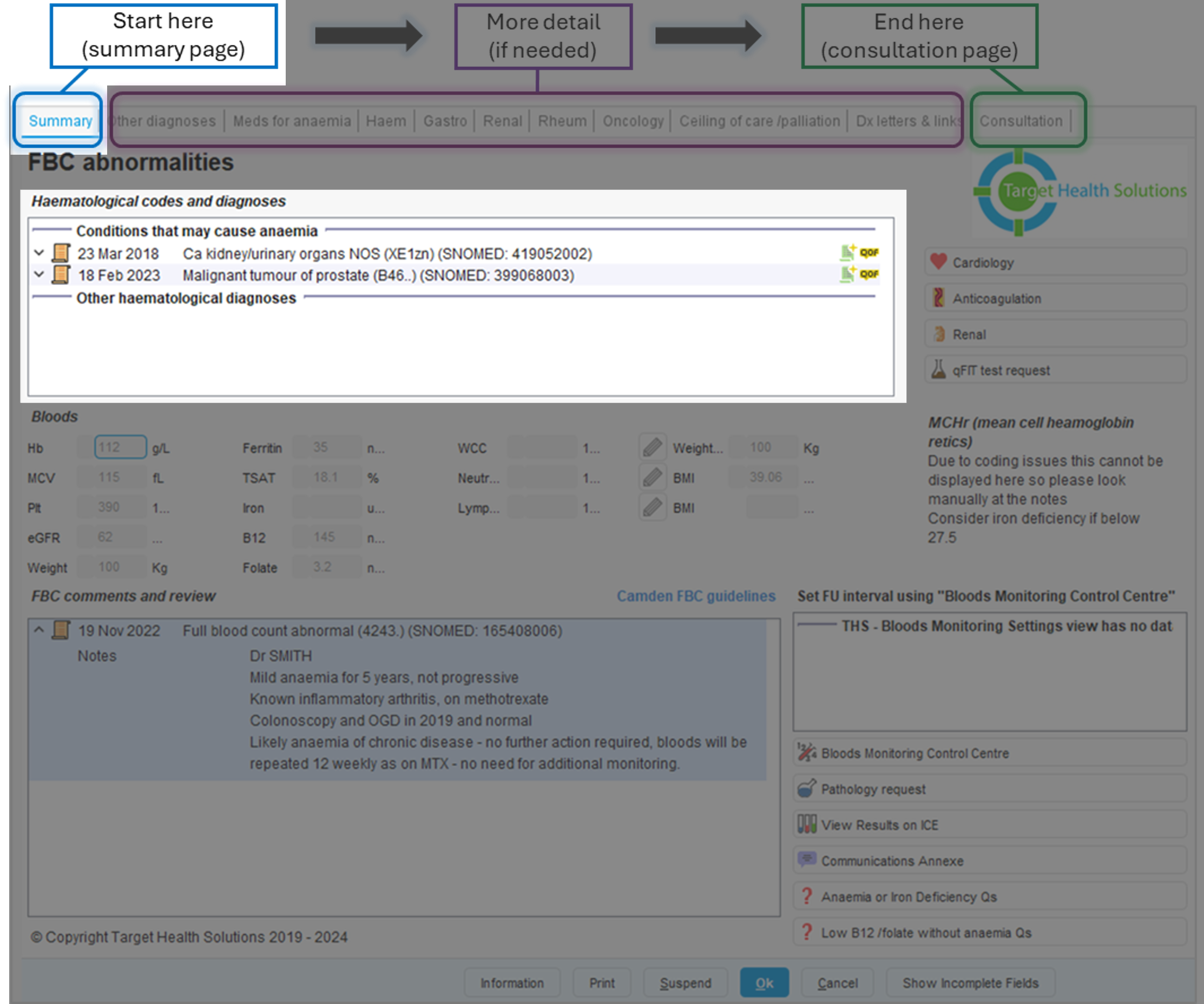
Summary of the key conditions that might be related to an abnormal FBC value.
Relevant tests
Abnormal results can trigger a lot of work. With this template, key tests are right in front of you, so a low haemoglobin, for example, can be processed quickly and you save time.
Simple and fast
As with our LTC templates, previous entries sit below. Click the arrow to open the last clinician’s assessment. Often the thinking is already done, so you can file the result quickly. Blood processing is simple and fast.
Key Letters, results, and guidance
The middle section brings together useful information and key letters, so review is quick and easy.
Making the next review even faster
By the end of the template you will have what you need to decide.
Once you add your entry, you are done. Your notes will appear on the summary page next time, making the next review quicker.
Imagine loading all this tech into one frailty and dementia template for INTs. Introducing iCGA 3.0.
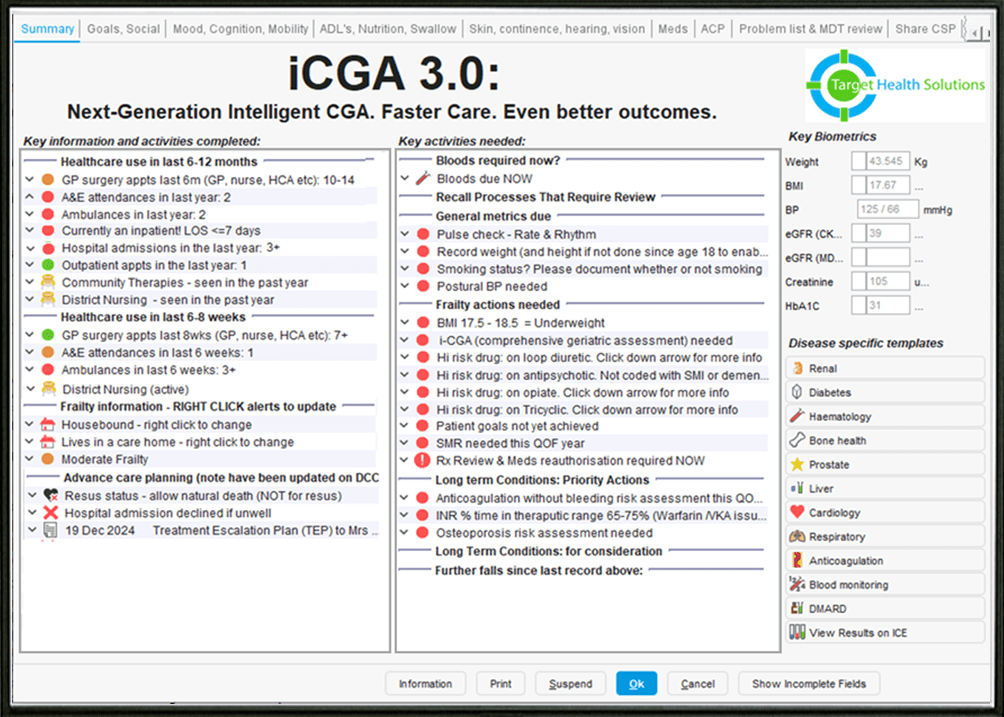
One Team. One assessment.
One shared assessment for all teams across health, social care, and the third sector.
Healthcare useage
iCGA 3.0 shows which services a patient has been known to in the last six to twelve months and their healthcare use over the past six to eight weeks.
This helps teams spot early signs of an evolving crisis.
At a glance view
A rapid overview of the person’s frailty status, care setting, advance care planning preferences, and link to their latest care and support plan.
Superior automated recalls
Automated recalls bring patients back for the tests and reviews they need across all long term conditions, medicines management, CQC, and national requirements.
It saves time, cuts workload, and ensures nothing is missed.
Recalls can be tailored so people with complex needs are seen more often until things improve.
IT-assisted decision support
iCGA 3.0 guides INT teams through every step of a complete CGA. It flags high risk medicines, poorly controlled long term conditions, and other markers linked to poor outcomes, then provides clear guidance on what to do next.
This strengthens clinical decision making, upskills the workforce, and ensures every iCGA is thorough and consistent.
Greater efficiency
Most actions are automated, including creating and sharing the care and support plan. Duplication has also been eliminated, giving clinicians more time to focus on patient care.
Continuity with one single source of truth
iCGA improves continuity by giving all teams one shared, accurate record.
Care and support plans are generated and shared instantly with the patient and every organisation in the Integrated Neighbourhood Team (INT), so everyone works from the same information when the patient needs help.
Evidence based
iCGA 3.0 is a third generation, IT-assisted CGA with enhanced decision support. Its earlier version, iCGA 2, has been independently peer reviewed, published, and shown to improve survival.
What's the impact?
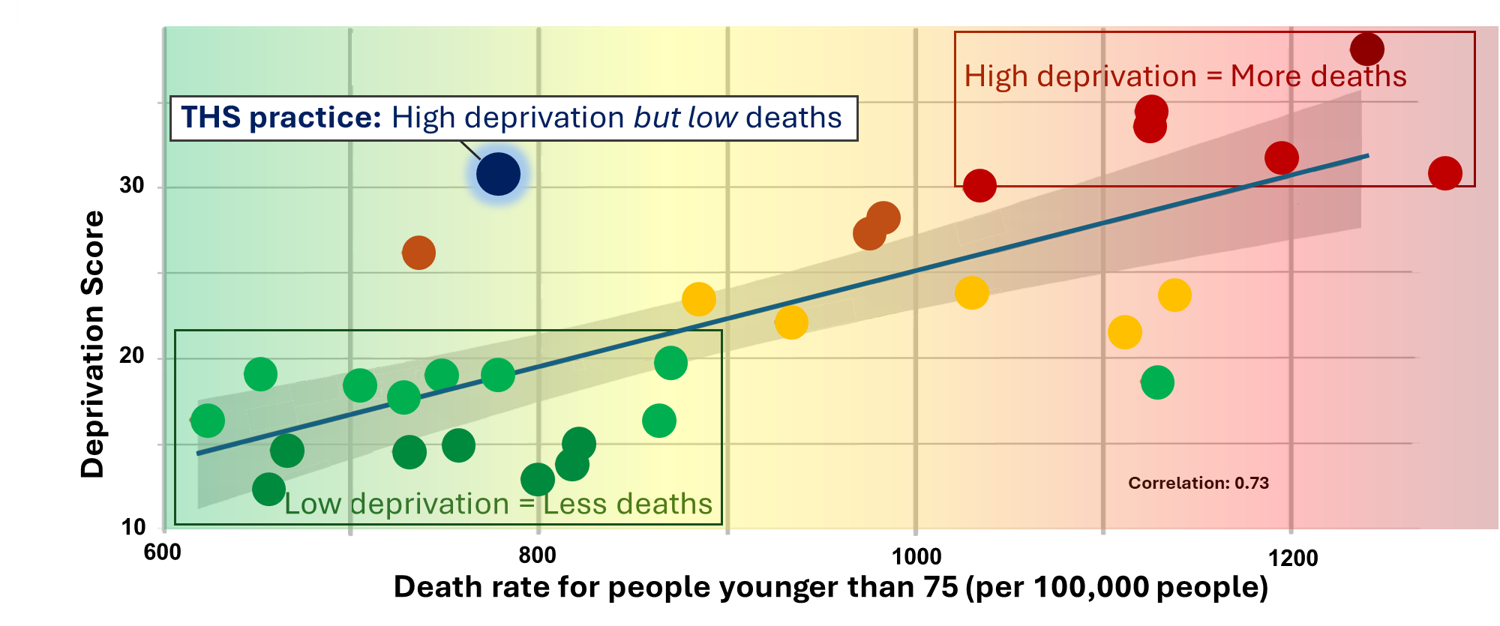
Living Longer, despite high deprivation*.
*Confirmed on independent ICB analysis
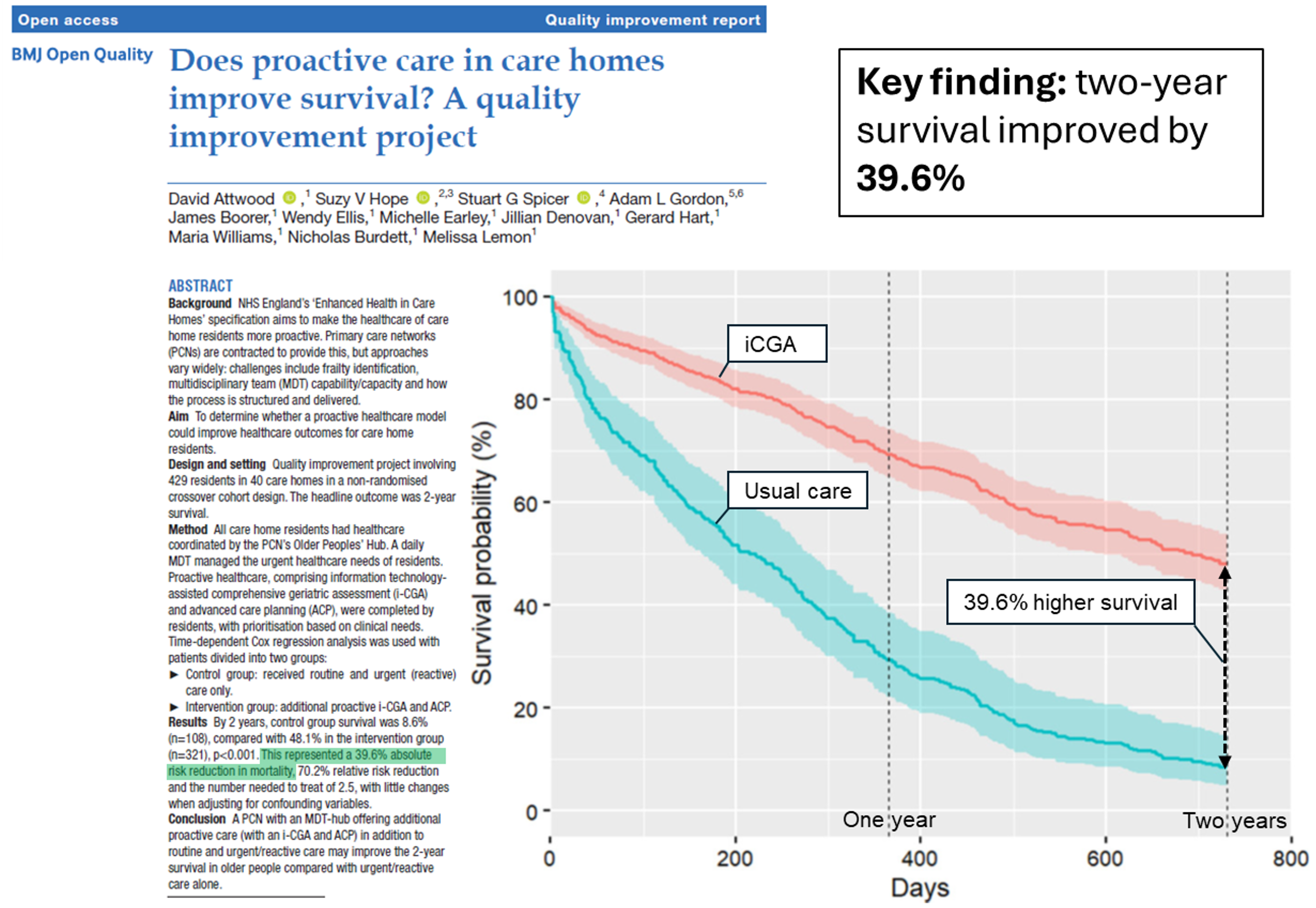
We also found better care home survival, now published.
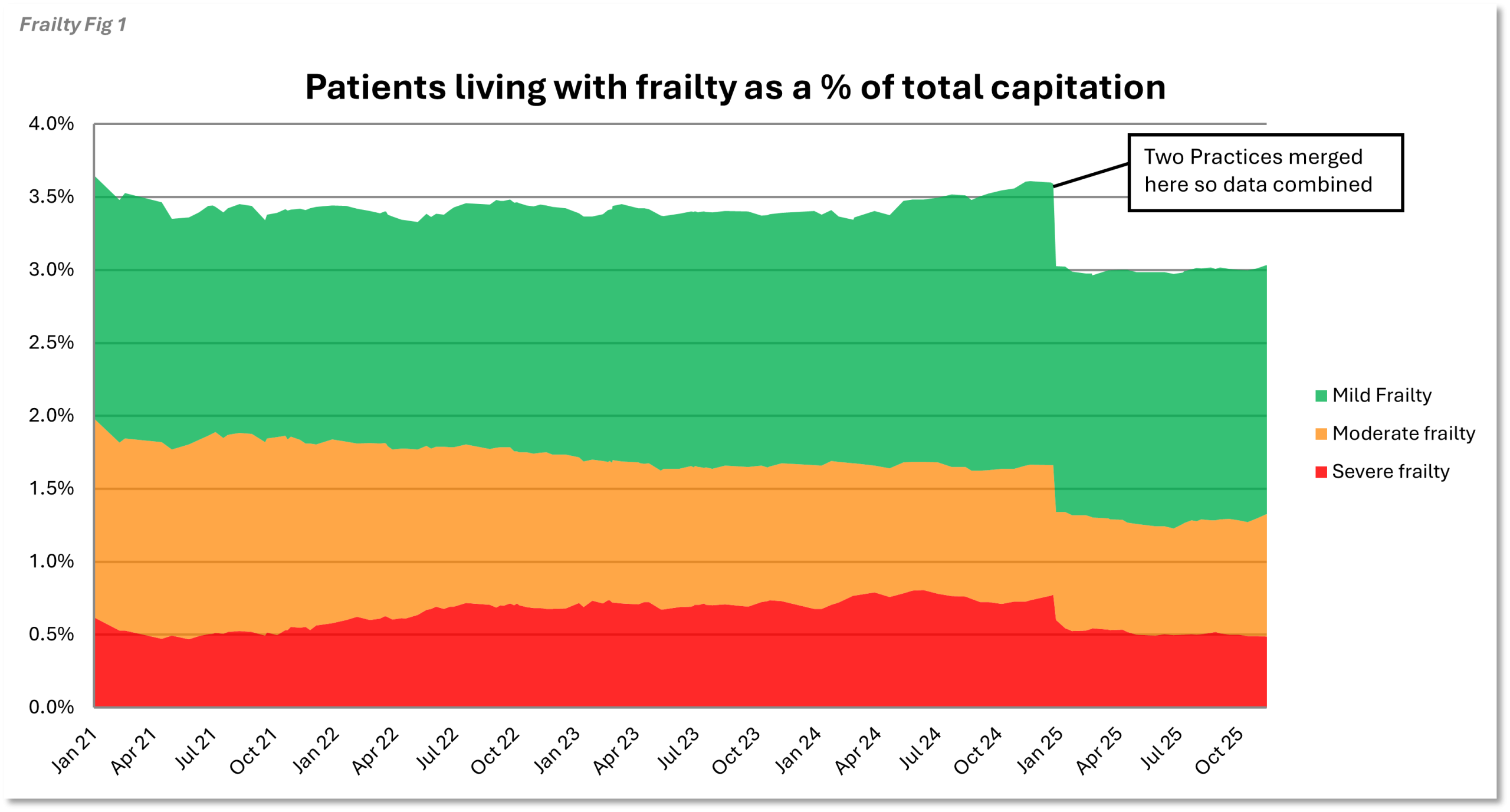
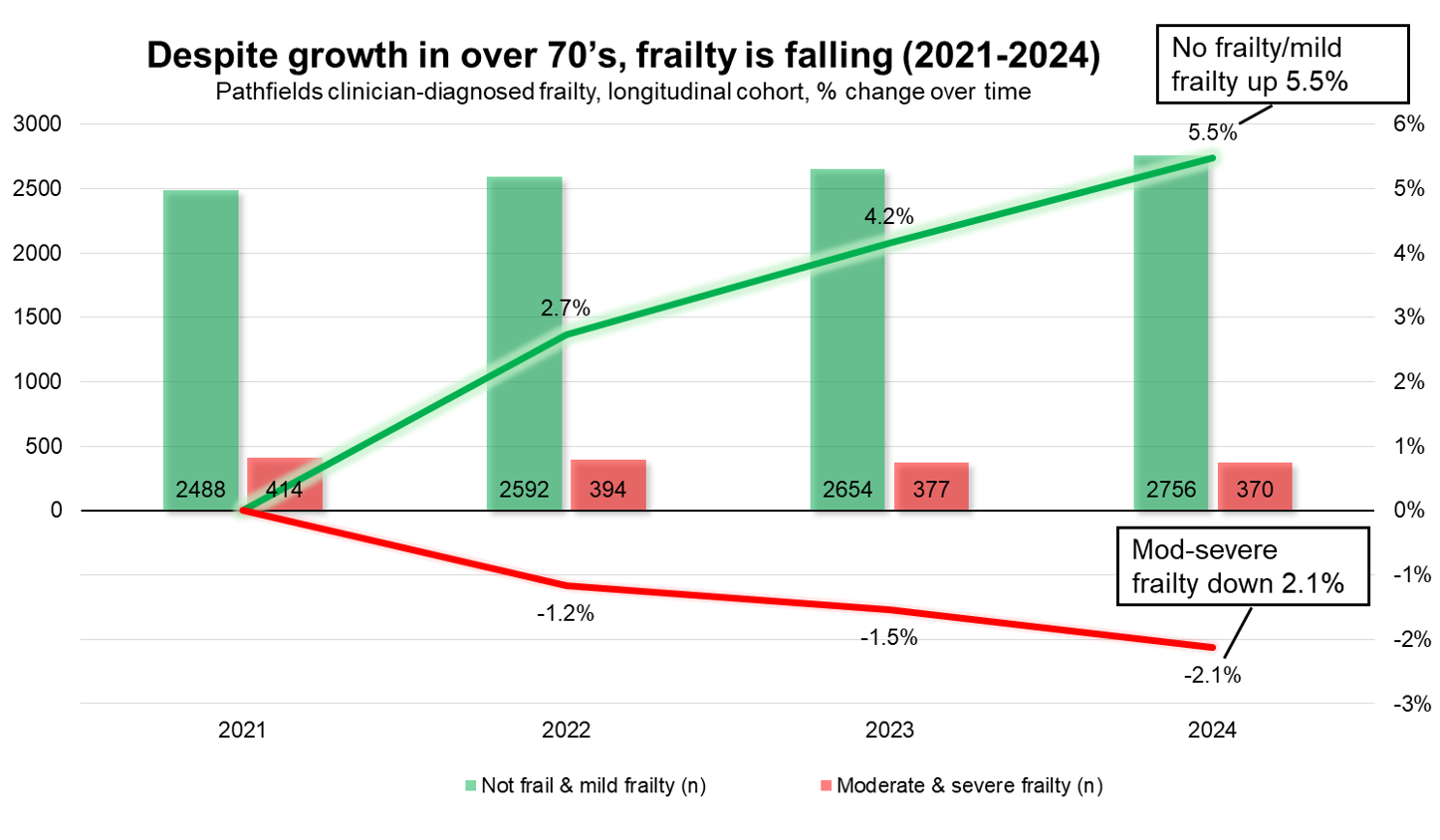
People are living better. Older people are fitter, and frailty is less common.*
*Longitudinal analysis of frailty over time in a THS practice, based on clinician-diagnosed frailty using the Pathfields Tool.
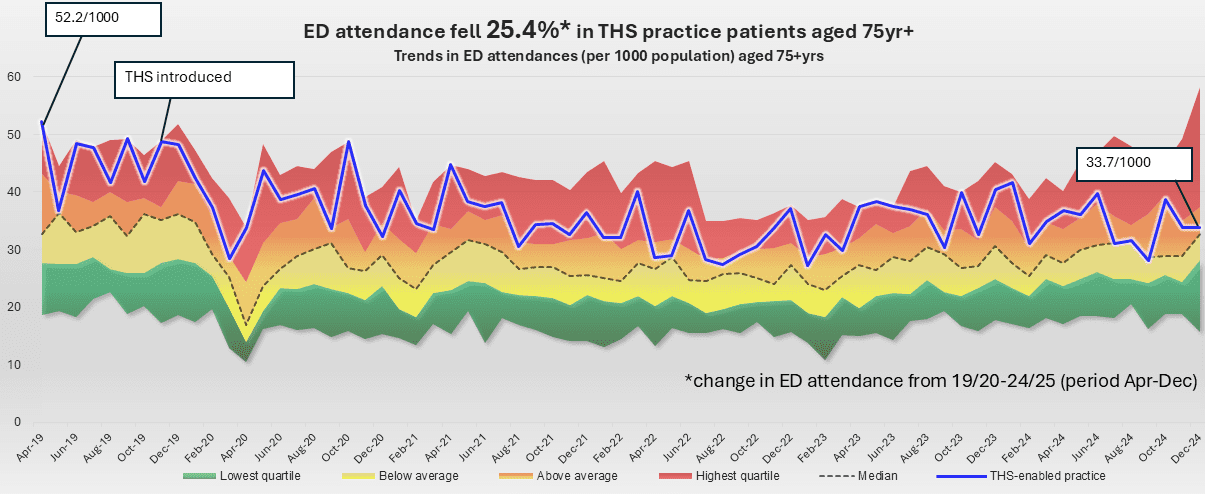
Reduced A&E attendance*
-
25.4% fewer A&E visits in over 75s living at home
-
41% fewer A&E visits from care homes
*confirmed by independent ICB analysis
Want to find out more?
Automating Great Care
Target Health Solutions helps GP practices deliver better care more efficiently, leading to improved patient outcomes, increased QOF income, greater productivity and increased profit.

Visit our sister site

Book a Demo