The first was fragmented information.
The second was human cognitive limits.
Together, they undermine every stage of population health management for frailty:
- Identification becomes fragmented because recognition of frailty is not automatically shared and opportunities for identification are easily missed across large populations.
- Prioritisation becomes harder because signals of deterioration are dispersed across multiple records and organisations.
- Continuity weakens because knowledge is repeatedly lost, rediscovered, and recreated.
- Coordination becomes dependent on phone calls, emails, meetings, referrals, and handovers.
- Comprehensive Geriatric Assessment (CGA) fragments into disconnected assessments whilst the complexity of frailty increasingly exceeds what clinicians can reliably hold in their heads.
Digital infrastructure exists to address these issues. Using examples from THS software, we explore how digital infrastructure can support identification, prioritisation, continuity, coordination, Comprehensive Geriatric Assessment, and population health management at neighbourhood scale.
Supporting frailty identification
We described how the Pathfields Tool was developed to bridge the gap between population-level identification and clinician-led diagnosis.
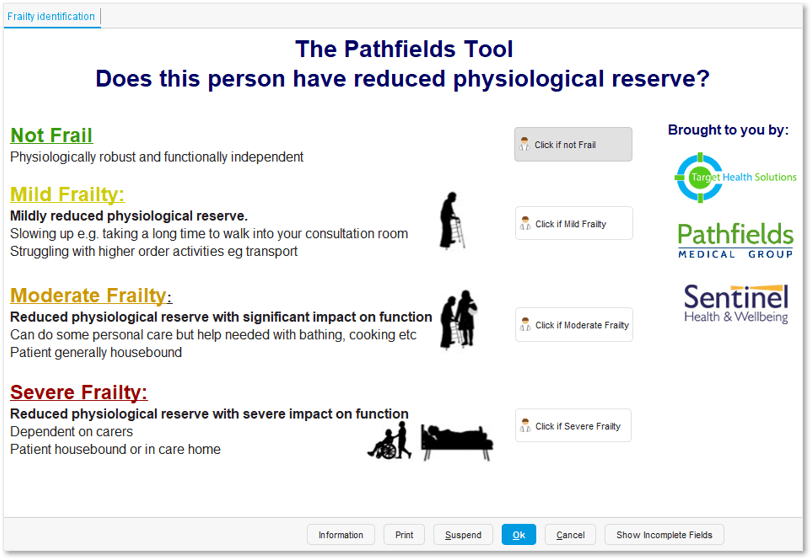
Figure 1. Pathfields Tool prompt displayed when a clinician saves the health record of an older adult identified as being at increased risk of undiagnosed frailty. By embedding frailty identification within routine clinical practice, the tool supports the development of a continuously updated frailty register (Clinical Frailty Scale diagrams reproduced with permission from Dalhousie University).
This illustrates an important principle.
Digital infrastructure does not replace clinical judgement.
It allows clinical judgement to operate systematically across an entire population.
The result is a dynamic understanding of who is living with frailty within a neighbourhood, creating the foundation on which population health management depends.
Supporting frailty prioritisation
Prioritisation tells us who needs attention first.
In Part 4, we explored how signals of deterioration such as falls, fractures, admissions, and high-risk prescribing often remain dispersed across multiple records and organisations.
Digital infrastructure helps bring these signals together. When aligned with a dynamic frailty register, isolated events become visible patterns of risk, allowing neighbourhood teams to move from reactive responses towards systematic prioritisation.
One practical example is high-risk prescribing.
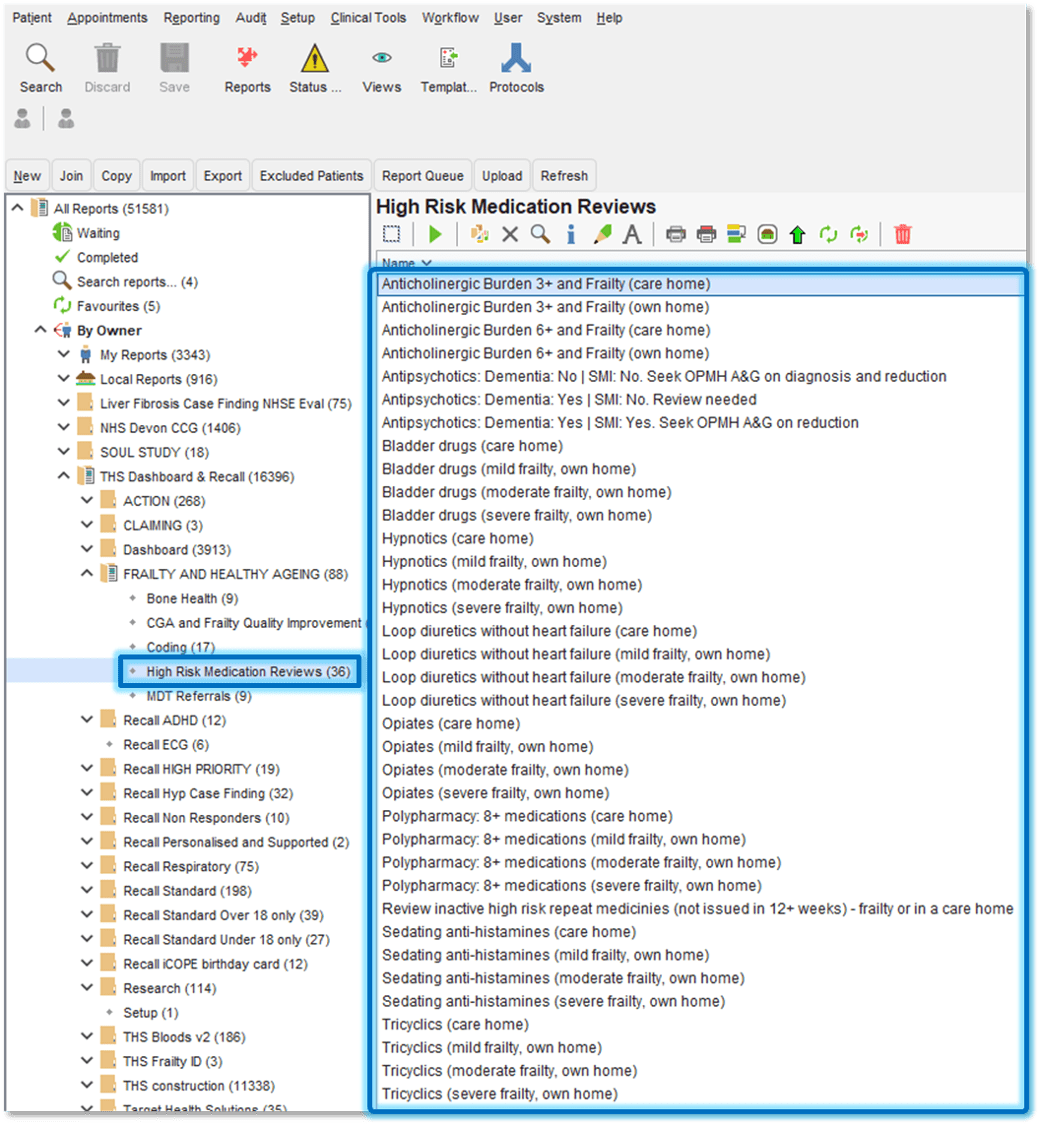
Figure 2: High-risk prescribing, when used as a signal and combined with frailty status, surfaces patients where medication may both contribute to instability and signal underlying unmet need.
Some patients may simply require a targeted medication review. Others reveal a broader pattern of unmet need when viewed alongside frailty status, healthcare utilisation, falls history, and other risk signals.
Signal detection allows neighbourhood teams to identify priority cohorts for MDT review and focus limited resources where they are most likely to improve outcomes.
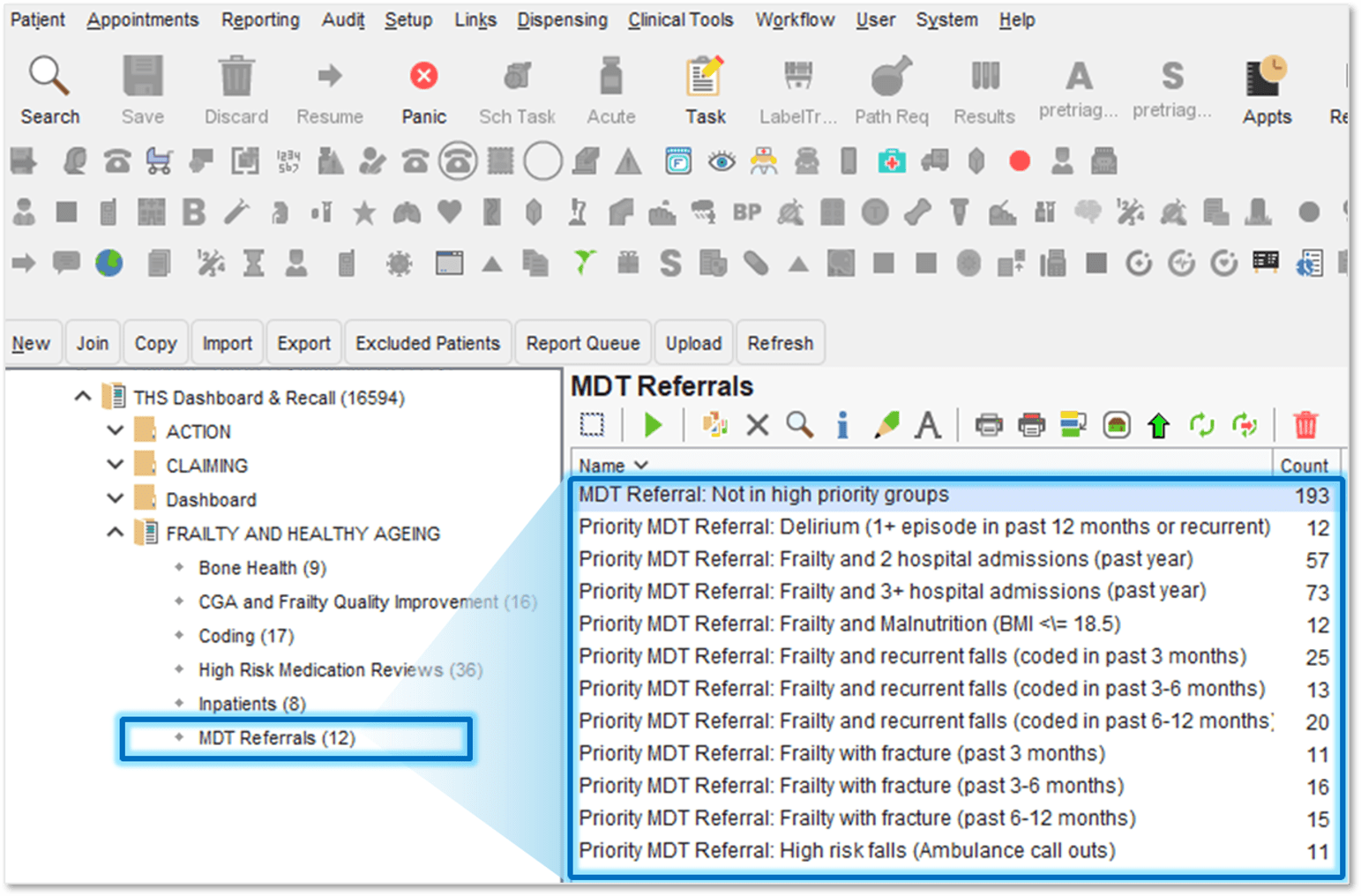
Figure 3: Targeted MDT search combining frailty with high-risk signals such as falls, admissions, malnutrition, and fracture to identify patients requiring coordinated intervention.
Supporting continuity
When information is spread across multiple organisations, knowledge is repeatedly lost, rediscovered, and recreated rather than carried forward as a shared understanding.
Digital infrastructure helps by bringing fragmented information together into a shared record from which a single multidisciplinary assessment can emerge.
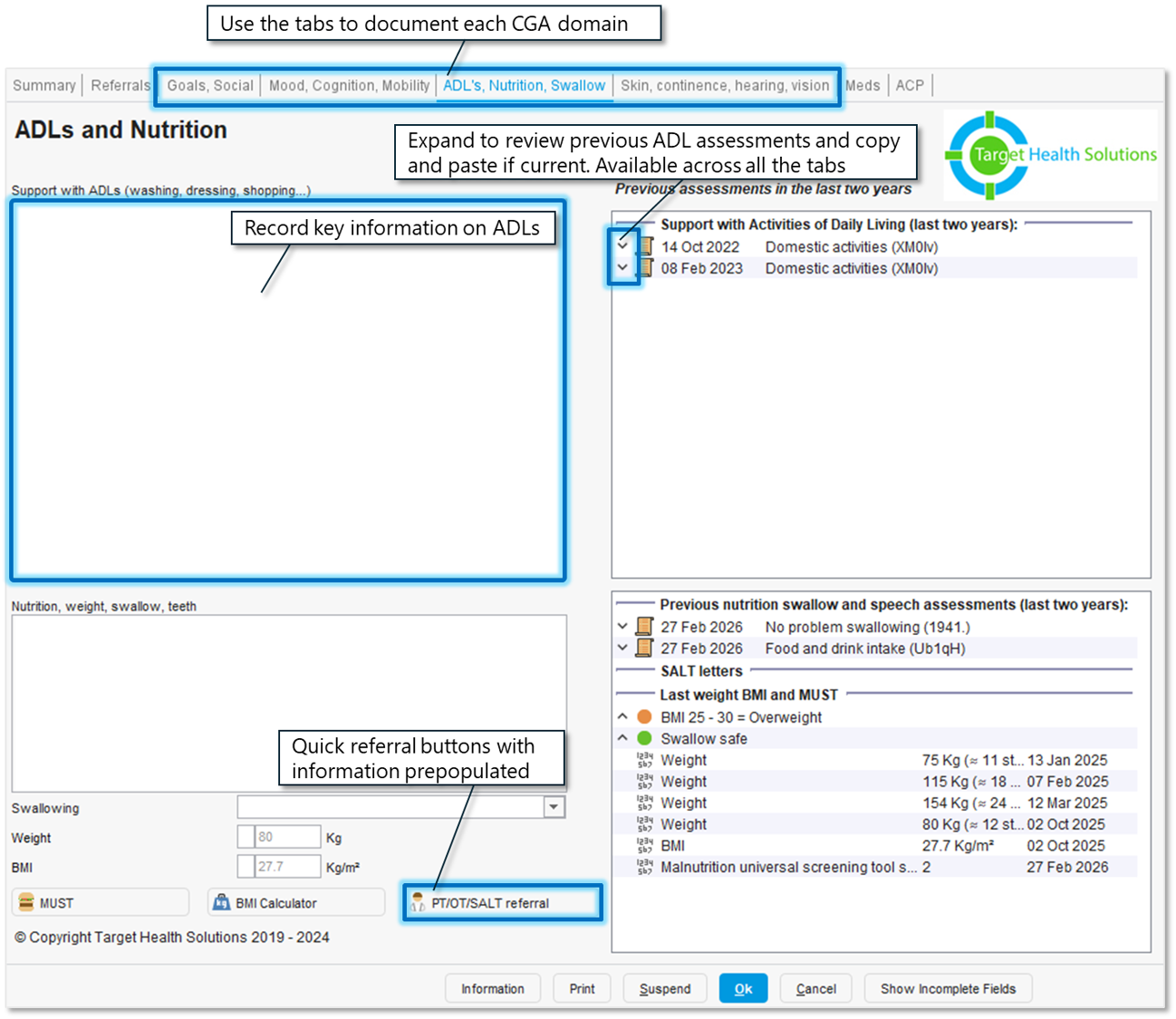
Figure 4. Shared read-write iCGA V3 showing how knowledge can be carried forward over time, helping the next professional see what is already known, what has already been done, and what needs to happen next. The example shown is the Activities of Daily Living section, but the same principle applies across the wider Comprehensive Geriatric Assessment.
Supporting coordination
Coordination becomes difficult when each organisation holds different information. Teams spend time requesting records, repeating assessments, and updating one another on decisions that have already been made.
Digital infrastructure supports coordination by allowing neighbourhood teams to work from the same assessment, care plan, interventions, and emerging concerns.
The result? The GP does not need to ask the community team what happened at their last visit. The social worker does not need to repeat an assessment that has already been completed. The care coordinator does not need to phone multiple services to understand the current plan. Everyone can work from the same understanding of the individual.
Supporting Comprehensive Geriatric Assessment
Throughout this series, we have argued that CGA is not a single assessment. It is a coordinated, continuous process delivered across a neighbourhood workforce.
Comprehensive Geriatric Assessment is inherently complex, requiring clinicians to consider many different aspects of a person’s life and health for every patient, every time. At some point, that complexity exceeds what can reliably be managed from memory alone, increasing the risk that important issues are overlooked and reducing the quality of the assessment.
Digital infrastructure helps address this challenge through structured assessment, decision support, alerts, and shared care planning.
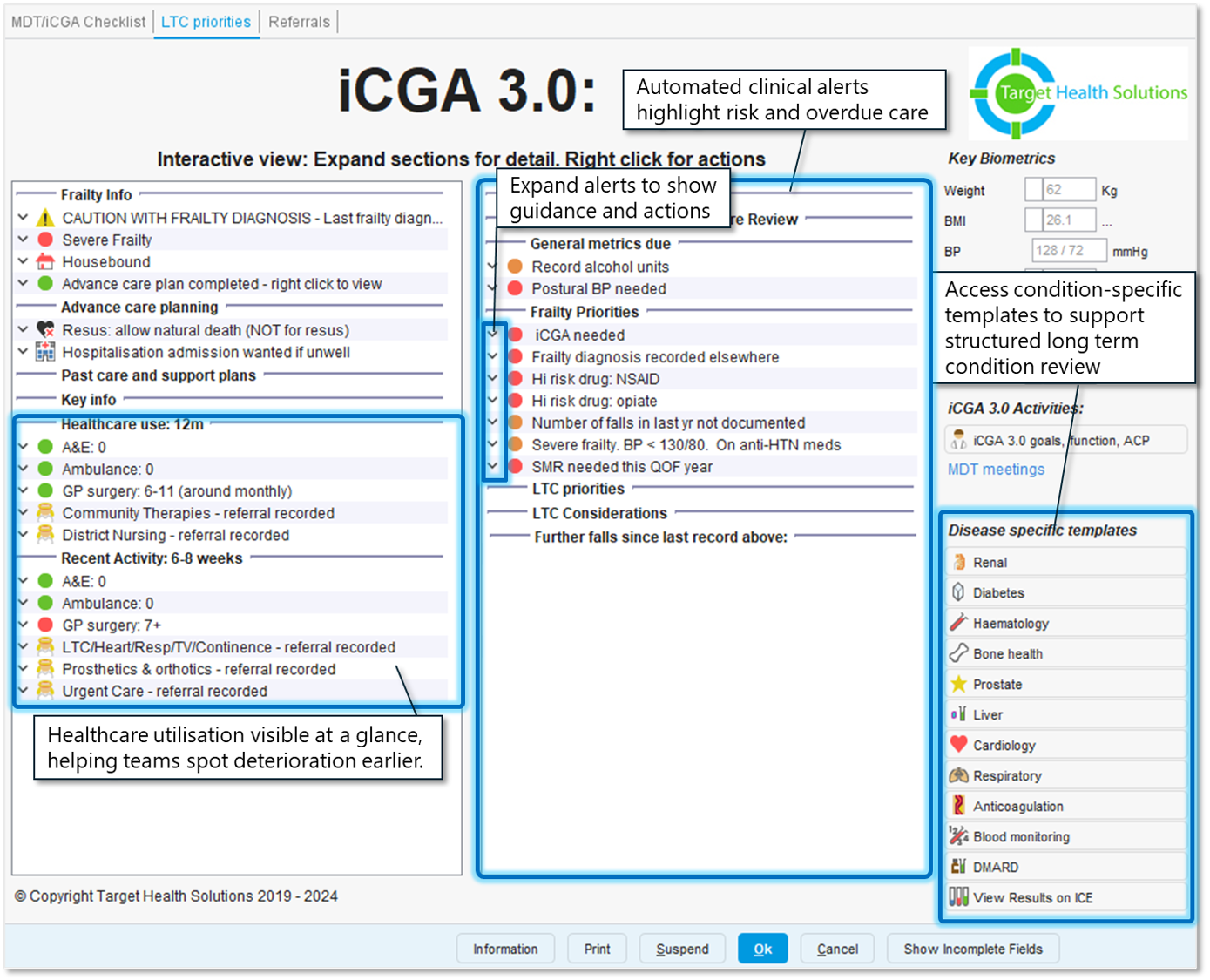
Figure 5: iCGA 3.0 decision-support view bringing together frailty priorities, healthcare utilisation, clinical alerts, and care planning information to help clinicians identify risk, prioritise interventions, and manage complexity.
Together, these tools help neighbourhood teams maintain the quality of CGA as it is delivered across multiple professionals, organisations, and interactions over time.
Supporting monitoring and service improvement
Digital infrastructure provides this through population dashboards, giving neighbourhood teams visibility of activity, risk, and outcomes across their frailty population.
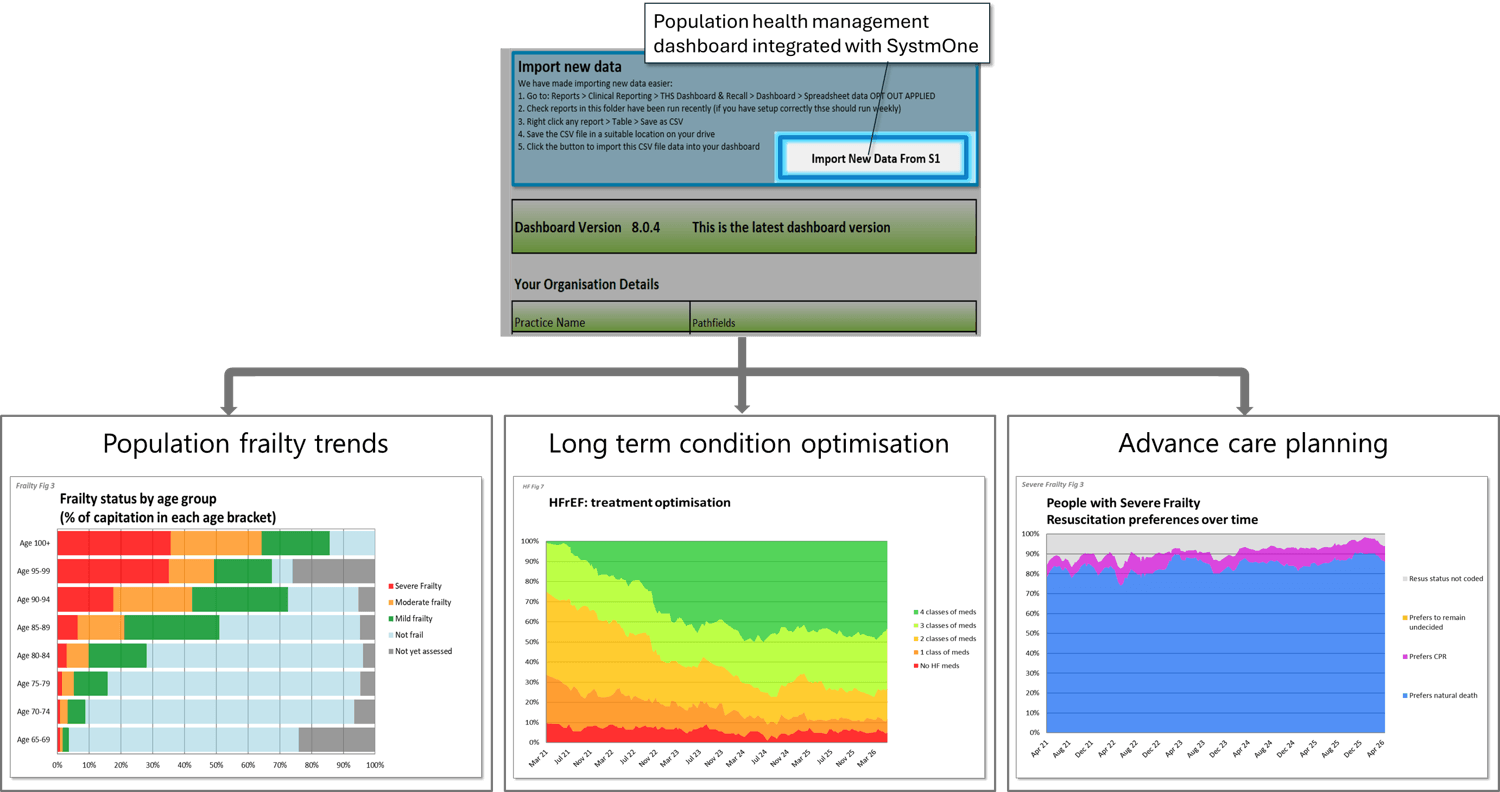
Figure 6: The THS population health dashboard converts structured clinical data into population-level intelligence to support monitoring, prioritisation, and service improvement across neighbourhood populations. Over 250 graphs and outcome metrics are available, with the examples shown here illustrating frailty trends, long-term condition optimisation, and advance care planning.
For example, a dashboard may identify rising levels of high-risk prescribing within a frailty population.
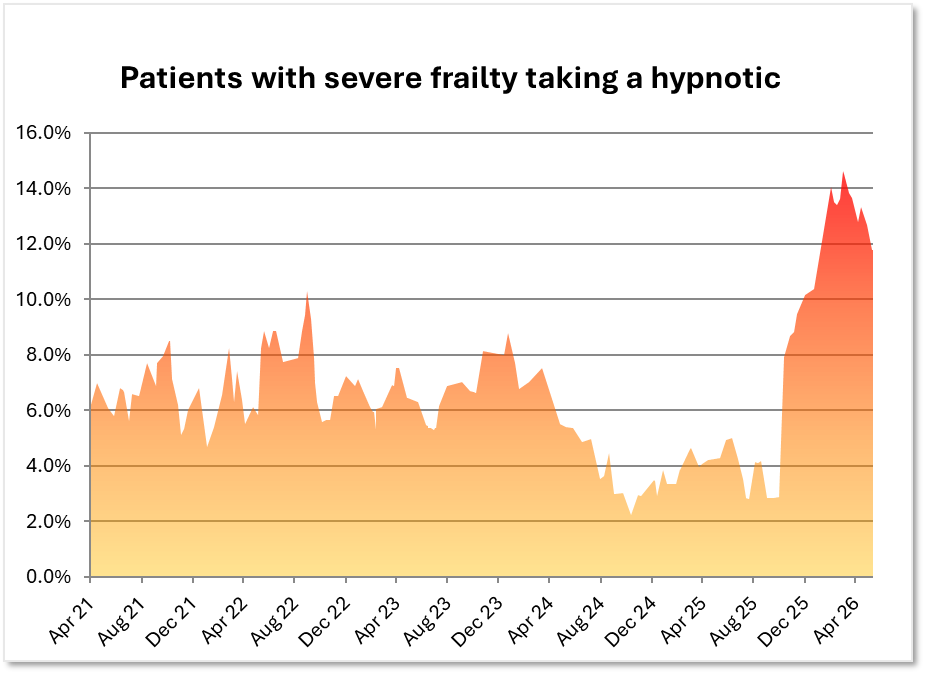
Figure 7: Population dashboard showing the proportion of people living with severe frailty prescribed a hypnotic. Rising rates can trigger targeted prescribing reviews, with ongoing monitoring used to evaluate whether interventions are reducing risk over time.
This creates a continuous cycle of identification, intervention, and evaluation, allowing neighbourhood teams to learn what is working and adapt services accordingly.
The same principle applies at neighbourhood level. Understanding frailty prevalence, patterns of deterioration, and variation between localities helps systems identify unmet need, target resources, and plan services around their population.
Summary
The NHS already delivers many of the components of effective frailty care. The challenge is not creating new interventions, but bringing existing activity together into a coordinated whole.
In Part 6, we explored how neighbourhood teams could help achieve this through better workforce integration.
In Part 7, we identified two fundamental barriers that remain even when the workforce is joined up: fragmented information and human cognitive limits.
This article has shown how digital infrastructure can help address both, supporting identification, prioritisation, intervention, and monitoring across a frailty population.
Taken together, these articles point towards a simple conclusion. Effective population health management for frailty depends on both workforce integration and information integration.
Neighbourhood teams provide the workforce infrastructure.
Digital provides the information infrastructure, helping neighbourhood teams identify need, coordinate interventions, and monitor outcomes across an entire population.
THS’s Neighbourhood Frailty System (NFS) provides one practical example of how these principles can be put into practice, bringing together identification, prioritisation, intervention, and monitoring to support population health management of frailty at scale.